• Skip to primary navigation
  • Skip to main content
  • Skip to primary sidebar
  • US Open Cup Central
  • US Open Cup Qualifying
  • US Open Cup History
  • Amateur Cup

Complete U.S. Open Cup Coverage

  • 2026 USOC Schedule
  • 2026 USOC Stat Leaders
  • 2027 USOC Qualifying Results
  • TheCup.us Awards
  • Join TheCup.us Patreon!
  • Contact Us

Miami Fusion

Things you should know about the Semifinals of the US Open Cup

July 3, 2012 by Josh Hakala

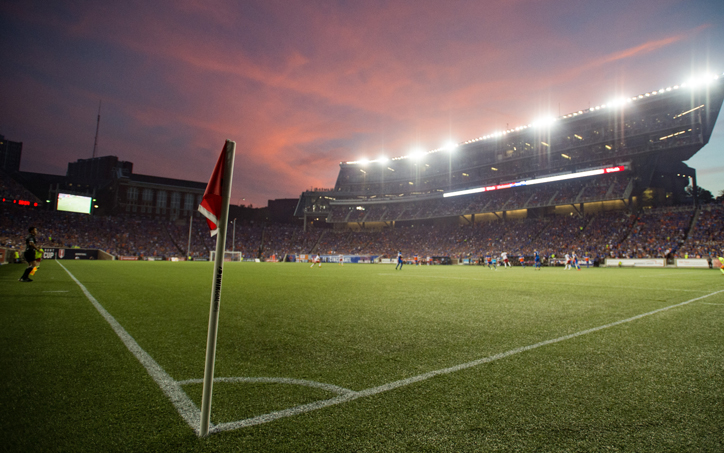
The New York Red Bulls take on FC Cincinnati in the US Open Cup Semifinals at Nippert Stadium in Cincinnati, OH on Tuesday August 15, 2017. Photo: Ryan Meyer | New York Red Bulls

Since 1996, only 14 non-MLS teams have advanced to the Semifinals.

2022 – Sacramento Republic FC (USL Championship)*
2017 – FC Cincinnati (USL)
2011 – Richmond Kickers (USL Pro – 3rd Division)
2009 – Rochester Rhinos (USL First Division)
2008 – Charleston Battery (USL First Division)*, Seattle Sounders (USL First Division)
2007 – Carolina RailHawks (USL First Division), Seattle Sounders (USL First Division)
2005 – Minnesota Thunder (USL First Division)
2004 – Charleston Battery (A-League)
1999 – Charleston Battery (A-League), Rochester Raging Rhinos (A-League)*
1997 – San Francisco Bay Seals (USISL Division 3 Pro League)
1996 – Rochester Raging Rhinos (A-League)*

* Advanced to the Final

Since 1996, only seven teams have advanced to the Semifinals after beginning play in the First Round. The Richmond Kickers (2011), Rochester Rhinos (2009), Charleston Battery (2008), Carolina RailHawks (2007), San Francisco Bay Seals (1997) and the Seattle Sounders who did it twice in 2007 and 2008. San Francisco and Richmond are the only Third Division pro clubs to advance to the final four during that span.Ukrainian Nationals logo

When the Sacramento Republic eliminated Sporting Kansas City in penalty kicks in the 2022 Semifinals, they became just the fourth lower division club in the Modern Era (1995-present) to advance to the Final. They joined the Charleston Battery who eliminated the Seattle Sounders in the 2008 Semifinals, and the Rochester Raging Rhinos in 1996 and 1999. The Rhinos were the only non-MLS team (since 1996) to win the title when they defeated the Colorado Rapids 2-0 in 1999.

In 2008, the Charleston Battery and the Seattle Sounders ended in a 1-1 draw, and then went to penalties where the Battery moved on 4-3. It was the first time a Semifinal game went to penalties during the Modern Era and the first time two non-MLS teams met in the final four.

The Chicago Fire entered Major League Soccer as an expansion team in 1998, and won the US Open Cup (and MLS Cup) in their inaugural season. In total, they have advanced to the Semifinals 13 times, which is more than any team in the history of the tournament (1913-present).

After Major League Soccer debuted in 1996 (1996 doesn’t make sense to include, since every Semifinalist was in their inaugural season that year), only four teams have advanced to the Semifinals in their inaugural season. The Fire (1998), Houston Dynamo (2006 – although they were essentially the San Jose Earthquakes, but they were still technically a “new franchise”), Carolina RailHawks (2007). The Seattle Sounders were a new MLS franchise in 2009, but the club had existed in the USL for several years prior to joining MLS.

In 2010, the Seattle Sounders became the first MLS expansion team to win a Semifinal match in each of their first two seasons as a franchise. They also won a Semifinal match in their third year (2011), and their fourth year (2012).

The Houston Dynamo celebrate after defeated LAFC in a PK shootout in the 2018 US Open Cup Semifinals. Photo: Houston Dynamo
The Houston Dynamo celebrate after defeating LAFC in a PK shootout in the 2018 US Open Cup Semifinals. Photo: Houston Dynamo

The 2007 US Open Cup marked the first time that both Semifinal matches went to extra time. The New England Revolution edged the Carolina RailHawks 2-1, followed by FC Dallas eliminating the Seattle Sounders (USL-1) by the same scoreline. Since then, this has only happened one other time: 2017 US Open Cup when Sporting Kansas City needed penalty kicks to take out the San Jose Earthquakes and then the New York Red Bulls came back to beat FC Cincinnati, 3-2 in extra time. It happened again in 2017 when Sporting Kansas City eliminated the San Jose Earthquakes in penalty kicks while the New York Red Bulls edged USL side FC Cincinnati 3-2 in extra time.

Semifinal appearances by MLS teams:

Chicago Fire – 13 (6-7-0 record)
DC United – 9 (5-4-0)
FC Dallas – 9 (4-4-1, 0-1 PKs)
LA Galaxy – 7 (4-3-0)
New York Red Bulls – 6 (2-4-0)
Sporting Kansas City – 6 (3-1-2, 1-1 PKs)
Seattle Sounders – 5 (5-0-0)
Columbus Crew – 4 (3-1-0)
New England Revolution – 4 (3-1-0)
Philadelphia Union – 4 (2-1-1, 1-0 PKs)
Houston Dynamo – 4 (1-2-1, 1-0 PKs)
Real Salt Lake – 3 (1-2-0)
Chivas USA – 2 (0-2-0)
Colorado Rapids – 2 (1-1-0)
Orlando City SC – 2 (1-1-0)
Portland Timbers – 2 (0-2-0)
San Jose Earthquakes – 2 (0-1-1, 0-1 PKs)
Atlanta United FC – 1 (1-0-0)
FC Cincinnati – 1 (0-0-1, 0-1 PKs)
Inter Miami CF – 1 (0-0-1, 1-0 PKs)
Los Angeles FC – 1 (0-0-1, 0-1 PKs)
Miami Fusion – 1 (1-0-0)
Minnesota United FC – 1 (1-0-0)
Tampa Bay Mutiny – 0

Note: The New York Red Bulls (Metrostars) have the most semifinal appearances (six) without an Open Cup championship.

Semifinal appearances by non-MLS teams:

Charleston Battery – 3 (0-2-1, 1-0 PKs)
Rochester Rhinos – 3 (2-1-0)
Seattle Sounders – 2 (0-1-1, 0-1 PKs)
Carolina RailHawks – 1 (0-1-0)
FC Cincinnati – 1 (0-1-0)
Minnesota Thunder – 1 (0-1-0)
Richmond Kickers – 1 (0-1-0)
Sacramento Republic FC – 1 (0-0-1, 1-0 PKs)
San Francisco Bay Seals – 1 (0-1-0)

Most consecutive Semifinal appearances (all-time):

Ukrainian Nationals (Philadelphia) – 8 (1959-66) — champions: 1960, 1961, 1963, 1966
Seattle Sounders (USL/MLS) – 6 (2007-2012) — champions: 2009, 2010, 2011, 2012
Stix, Baer & Fuller (St. Louis) – 6 (1932-37) — champions: 1933, 1934, 1935
Bethlehem Steel (Bethlehem, Pa.) – 5 (1915-19) — champions: 1915, 1916, 1918, 1919
Chicago Fire – 4 (2003-06) — champions: 2003, 2006
Chicago Fire – 4 (2013-16) — champions: None
Los Angeles Galaxy – 4 (2000-03) — champions: 2001
Philadelphia Nationals (1949-52) — champions: None
DC United – 3 (2008-2010) — champions: 2008
Pawtucket Rangers – 3 (1933-35) — champions: 1941
Dallas Burn (FC Dallas) – 3 (1996-98) — champions: 1997
Maccabee AC (Los Angeles) – 3 (1980-82) — champions: 1973, 1975, 1977, 1978, 1981
NY Greek Americans (New York City) – 3 (1967-69) — champions: 1967-69
Brooklyn Hispano (Brooklyn, NY) – 3 (1943-45) — champions: 1943, 1944
Croatian SC (Chicago) – 3 (1979-81) — champions: None
Ponta Delgada (Mass.) – 3 (1946-48) — champions: 1947
Fall River Rovers (Mass.) – 3 (1916-18) — champions: 1917
Scullin Steel (St. Louis) – 3 (1921-23) — champions: 1922

The most popular Semifinal matchup in the Modern Era has been the Chicago Fire against the Los Angeles Galaxy who have played each other three times.

2000: Chicago Fire 2:1 (ASDET) Los Angeles Galaxy (at Los Angeles)
2001: Los Angeles Galaxy 1:0 (ASDET) Chicago Fire (at Los Angeles)
2003: Chicago Fire 3:2 Los Angeles Galaxy (at Chicago)

The highest attendance for a Semifinal match in the Modern Era was 16,117 set by Sporting Kansas City when they defeated Real Salt Lake 3-1 at Sporting Park in Kansas City on Aug. 12, 2015. Two years later, USL side FC Cincinnati more than doubled that record with an announced crowd of 33,250. At the time, according to TheCup.us records, this was the second-highest attendance ever recorded for a US Open Cup match.

The highest average attendance between two Semifinal matches came in 2013 when Real Salt Lake hosted the Portland Timbers and the Chicago Fire hosted DC United. The average was 12,889. Real Salt Lake drew a then-record 14,742 and Chicago had an announced crowd of 11,036. However, in 2017, FC Cincinnati’s record crowd of 33,250 pushed the average attendance to nearly double the previous record: 24,722.

The following states have never had a team advance to the Semifinals:
Alabama
Alaska
Arizona
Arkansas
Delaware
Hawaii
Idaho
Iowa
Kentucky
Maine
Mississippi
Montana
Nebraska
Nevada
New Hampshire
North Dakota
Oklahoma
South Dakota
Tennessee
Vermont
West Virginia
Wyoming

The longest current Semifinal drought is from the state of Rhode Island, who hasn’t had a time reach the Semifinals since 1942 when the Pawtucket Rangers reached the final four for the ninth and final time.

Filed Under: US Open Cup, US Open Cup History Tagged With: Carolina RailHawks, Charleston Battery, Chicago Fire MLS, Colorado Rapids, Columbus Crew, DC United, FC Dallas/Dallas Burn, Houston Dynamo, Los Angeles Galaxy, Miami Fusion, Minnesota Thunder, New England Revolution, New York Red Bulls/Metrostars, Rochester Rhinos, San Francisco Bay Seals, San Jose Earthquakes/San Jose Clash, Seattle Sounders USL, Sporting Kansas City/Kansas City Wizards, Things You Should Know

The Other US Opens and marketing the ‘US Soccer Majors’

September 25, 2011 by Gerald Barnhart

Every year when the Lamar Hunt US Open Cup tournament rolls into the lights shining down onto the stadium pitch, the inevitable comparisons to the FA Cup in England come into play as part of the explanation to what the tournament is for journalists. And often times it’s followed by the unfortunate analogizing of the event to minor and major league baseball teams playing one another in a single-elimination tournament.

But perhaps the better comparisons we should all be making is to the other Opens in which the American media already treat as serious events. These events also pit amateurs versus professionals on an open entry basis, and are also among numerous events within the specific sport. These events, of course, are the US Open tennis tournaments held annually in New York and the US Open golf championship held in a different location each year around the United States.

Each fall, the world’s best tennis players convene on the hard courts of the USTA’s Billy Jean King National Tennis Center in Queens, NY for the tour’s fourth and final major of what the sport considers the Grand Slam. Those top-flight professionals are joined by winners of an open playoff system that is comprised 16 sectionals and a national playoff event in which only USTA members may participate. In the end, 128 participants each take part in the men’s and women’s brackets (64 for doubles).

Last year, over 1,200 players took part in the USTA’s National Playoffs for a chance to compete in the singles events at the US Open. Unlike US Soccer’s Open Cup, only one male and one female earned qualification spots to compete against the world’s best in the tournament.

The Chicago Fire have won six majors, including four US Open Cup championships | Photo by Brian Kersey/Wireimage.com

The US Open golf tournament, held in June, is comparatively more open with approximately half the participants advancing from qualification play to join the world’s top players who are automatically in the field through 17 exemptions categories via such things as being tournament winners or holding a certain world ranking.

At the 2010 tournament, 75 of the 156 participants were non-exempted players who qualified through the two-stage process to reach the famed Pebble Beach Golf Links for the championship. The process begins with Local Qualifying, a series of over 100 18-hole tournaments held around the country. Many top players not already qualified through full exemption are, however, exempt from local qualifying and join the process at the Sectional Qualifying stage where they participate in one of several one-day, 36-hole tournaments in the United States. There is also a Sectional tournament in both Europe and Japan where 11 and 4 individuals qualified, respectively, in 2010.

The major difference between the US Open Cup and the US Open tennis and golf duo is that the US Soccer Federation event is the only one that is a championship tournament for Americans while the other two are open to foreign participants. The only clubs eligible for the US Open Cup are American-based teams that are affiliated through the USSF; however, for argument’s sake it does still feature a foreign component as teams are comprised, in part, of players that are not American.

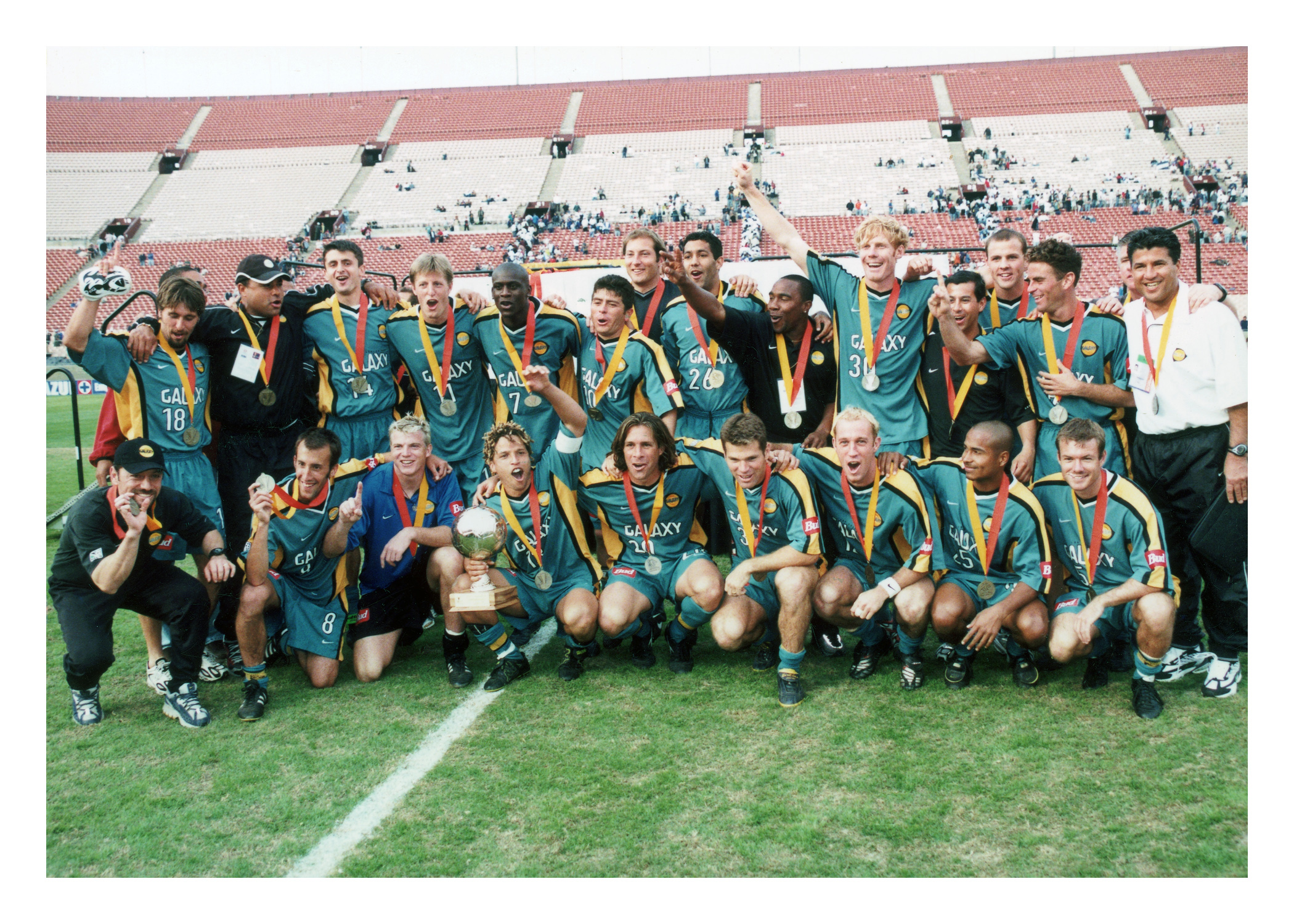
The Los Angeles Galaxy have won eight majors, and are one of only two MLS clubs to win the CONCACAF Champions Cup (DC United). They won the Champions Cup in 2000 | Photo: Los Angeles Galaxy

Continuing on the golf tangent, another significant open tournament American media and sports fans are very familiar with and follow every July is the British Open (officially known as The Open Championship), which is the oldest of the four golf majors and is the only one held outside of the United States. Similar to the US Open, the majority of the 156 participants are automatic entrants through exemption with the remaining players advancing from a two-stage qualification process.

Through 2004, players from around the world were only able to qualify through 18-hole Local Qualifying events held around Britain and Ireland within two weeks of The British Open followed by 36-hole Local Final Qualifying tournaments a few days later. International Qualifying events, 36-hole tournaments, were added in 2004 to assist foreign professionals wishing to participate, holding qualifiers in Africa, Australia, Asia, America and Europe with more stringent entrance standards than Local Qualifying.

Packaging & Marketing US Soccer Majors

The golf and tennis tours are lengthy seasons that run from January to the fall with tournament events nearly every week, but it is the majors where media coverage amps up and fan viewership heightens. With the similarities of the American Open majors to the US Open Cup, perhaps there are other lessons to be learned from the golf and tennis tours, such as the incorporation US Soccer Majors as a marketing tool for the sports’ leading championship events for American clubs.

A matching structure of four championships already exists with the US Open Cup joined by the MLS Cup, MLS Supporters’ Shield (regular season championship) and the CONCACAF Champions League.  Currently, the MLS Cup is the leading championship, but by creating a platform that raises the perception of the other three events to a comparable level to the league’s championship playoff, it will increase awareness among the media and fans while also, hopefully, creating a greater sense of seriousness and urgency to win the other events among the clubs and coaches.

Bringing these four championships together into one packaged series allows for a greater ability to compare the success of clubs beyond just winning MLS Cup as though this was the NFL and the Super Bowl while clubs around the rest of the world are evaluated on all the various events in which they participate. It would be similar to how tennis players and golfers are measured by majors won.

DC United lead all MLS clubs with 11 majors, including the 1996 US Open Cup championship | Photo: DC United

For instance, the Los Angeles Galaxy and DC United are the only two clubs that have won all four majors (dating back to the CCL precursor CONCACAF Champions Cup). In fact, the two also hold the most total majors with DC boasting 11 (4 MLS Cups, 4 Supporters’ Shields, 2 Open Cups and a CCC) and the Galaxy having eight (2 MLS Cups, 3 Supporters’ Shields, 2 Open Cups and the CCC).

Only five clubs have won all three of the domestic majors with the Chicago Fire, Columbus Crew and Sporting Kansas City having won everything but a CONCACAF championship at least once. The Fire are third in total majors (6) and the Crew are fourth (5).

Only three American MLS clubs are without a major championship, excluding expansion Portland. The New York Red Bulls, Chivas USA and Philadelphia Union have yet to claim one of the big prizes.

In the last five years, the most successful clubs in the United States have been Columbus and DC, each having won three majors. The Crew have won the Supporters’ Shield twice and the MLS Cup once. DC also has two Supporters’ Shields, but has a US Open Cup championship to round things out. Houston and Seattle each have two titles with the Dynamo winning MLS Cup twice in a row and the Sounders taking the Open Cup title back-to-back. Five other teams each have one major as nine clubs have won the 15 possible domestic majors while coming up empty in the Champions League, which is completing its third run with Real Salt Lake still in the hunt for a second major in the same cycle in which it won the MLS Cup title and qualified for the event.

All-Time ‘US Soccer Majors’ Winners List

11 – DC United (4 MC, 4 SS, 2 OC, 1 CCC)
8 – Los Angeles Galaxy (2 MC, 3 SS, 2 OC, 1 CCC)
6 – Chicago Fire (1 MC, 1 SS, 4 OC)
5 – Columbus Crew (1 MC, 3 SS, 1 OC)
3 – San Jose Earthquakes (2 MC, 1 SS)
3 – Sporting Kansas City (1 MC, 1 SS, 1 OC)
2 – Houston Dynamo (2 MC)
2 – Seattle Sounders (2 OC)
1 – Colorado Rapids (MC), FC Dallas (OC), Real Salt Lake (MC), New England Revolution (OC), Rochester Rhinos (OC), Tampa Bay Mutiny (SS), Miami Fusion (SS)

(MC – MLS Cup, SS – Supporters’ Shield, OC – US Open Cup, CCC/CCL – CONCACAF Champions Cup/League)

Filed Under: US Open Cup Tagged With: Chicago Fire MLS, Colorado Rapids, Columbus Crew, concacaf, CONCACAF Champions League, DC United, FC Dallas/Dallas Burn, Houston Dynamo, Lamar Hunt US Open Cup, Los Angeles Galaxy, Major League Soccer, Miami Fusion, MLS, MLS Cup, MLS Supporters’ Shield, New England Revolution, Real Salt Lake, San Jose Earthquakes/San Jose Clash, Seattle Sounders MLS, Sporting Kansas City/Kansas City Wizards, Tampa Bay Mutiny, US Open Cup

Primary Sidebar

Follow Us on Social Media

  • Bluesky
  • Facebook
  • Instagram
  • Twitter
  • YouTube

U.S. Open Cup History

1935 National Challenge Cup Semifinals: After 29 days, Central Breweries win 3-game Western Final

The Western Final of the 1934/1935 National Challenge Cup featured one of Chicago’s best teams from the first 30 years of the tournament against a St. Louis team that would form their own dynasty.

  • 1995 US Open Cup: Rob Ukrop of Richmond Kickers voted TheCup.us Player of the Tournament
  • 1995 US Open Cup Final: Jeff Causey of Richmond Kickers voted TheCup.us Player of Round
  • 1995 US Open Cup Final: Richmond Kickers survive heat, beat El Paso Patriots in PKs to win title
  • 1995 US Open Cup Final Preview: El Paso Patriots hosting amateur Richmond Kickers in “El Sauna”
  • 1995 US Open Cup Semifinals: Jake Arrambide of El Paso Patriots voted TheCup.us Player of Round

Analytics powered by

Copyright © 2026 • Built by Jacob Martella Web Development