• Skip to primary navigation
  • Skip to main content
  • Skip to primary sidebar
  • US Open Cup Central
  • US Open Cup Qualifying
  • US Open Cup History
  • Amateur Cup

Complete U.S. Open Cup Coverage

  • 2026 USOC Schedule
  • 2026 USOC Stat Leaders
  • 2027 USOC Qualifying Results
  • TheCup.us Awards
  • Join TheCup.us Patreon!
  • Contact Us

Maccabee AC

Vasco De Gama’s journey from Connecticut to 1978 US Open Cup Final as Pele’s opening act at Giants Stadium

July 30, 2022 by Owen Diana

Connecticut's Vasco da Gama: 1978 US Open Cup runner-up
Connecticut’s Vasco da Gama: 1978 US Open Cup runner-up

Before the US Men’s National Team became a regular at the FIFA World Cup, before Major League Soccer burst onto the scene, there was the North American Soccer League (NASL). Founded in December of 1967 as a fusion between the United Soccer Association and the National Professional Soccer League, the NASL helped raise the profile of soccer in the United States during its 17 years in existence. The arrival of legendary players such as Pelé, Johan Cruyff and Giorgio Chinaglia drew huge crowds to NASL games, which were broadcast on network television from 1975 to 1980.

That level of exposure was a pipe dream for a tournament like the US Open Cup, which was still called the National Challenge Cup back in those days. Despite the Cup’s status as the oldest knockout tournament in the United States, NASL teams never participated in the storied competition.

The Challenge Cup lived a separate existence from the glitz and glamour of the country’s top domestic league, but the two did briefly cross paths on July 30, 1978. The old Giants Stadium hosted an unprecedented doubleheader on that scorching summer afternoon, with the National Challenge Cup Final taking place before an NASL regular season game between Pele’s New York Cosmos and the Tampa Bay Rowdies. It was a matchup between two teams that would meet again later in the season in the 1978 Soccer Bowl. The Cosmos would win the league title that day, 3-1. 

Giants Stadium: Home of the 1978 US Open Cup Final.

Although it was the undercard for one of the most eagerly-anticipated contests in American soccer, the build-up to the Challenge Cup showpiece received little media attention. That lack of interest from the press was matched by the indifference of the general public, with a reported 1,000 supporters doing their best to create a raucous atmosphere in a cavernous NFL stadium capable of accommodating more than 80 times that number of people during New York Giants and New York Jets games.

It was the 66th edition of the National Challenge Cup that year and the competition had never had a game take place in a venue as large as Giants Stadium.

The majority of those in attendance were there to cheer on debutants Vasco da Gama, who were based just over an hour away in Bridgeport, Conn. Originally a cultural and civic center for the Portuguese population in the city, Vasco formed a soccer team in the 1940s. When the Portuguese expat community grew during the 1970s, Vasco capitalized on the influx of talent to become one of the most powerful outfits on the East Coast. They had won five of the last seven state amateur cup titles, and at the time of the Final, were on their way to winning their sixth Connecticut Soccer League championship in the last seven years.

The 1978 vintage under their head coach Manuel Gaspar, just wanted to “win, win, win”, according to starting left-back Alvaro Ribeiro, and a close-knit group did plenty of that on their way to the final. They defeated Cleveland-based Inter-Italia SC 1-0 in extra time in the Round of 16. In the Quarterfinals, they had to travel into the city to take on the New York Astros at the historic Metropolitan Oval in Queens. After another narrow 1-0 win, the Connecticut Soccer League leaders got to host the Semifinals match against Ross Chain Bike out of the Philadelphia area. After neither team could find a goal, the match had to be decided by a penalty kick shootout. Joe McGuigan converted the winning kick to make Vasco the first Connecticut team to ever reach the championship game.

However, Los Angeles-based Maccabee AC, who had won three championships (1973, 1975, 1977) in the previous five years, stood between them and a chance at making Nutmeg State history. The Maccabees won that third title last year in Los Angeles, just like the previous two. So this was their first championship game outside of Southern California. 

Jackie Robinson Stadium in Los Angeles was the site of Maccabee AC’s Southern California semifinal against Croatian SC on Feb. 12, which they won 2-0. A month later, in the Round of 16, they toppled Homenetmen 3-2 in front of 1,900 fans at the same stadium. The Quarterfinals (Regional Semifinal), were almost always a Northern California vs. Southern California matchup, and the Maccabees faced the San Francisco Glens home-and-away over two legs. The Maccabees won 1-0 in San Francisco on May 14, followed by a 4-0 home win the following week. In the national semifinals, they hosted Chicago’s RWB Adria where they pulled off a narrow 1-0 win to punch their ticket to the Final.  

Support TheCup.us and its coverage of the US Open Cup by purchasing a "Champions" shirt, honoring the five clubs from the pre-Modern Era (1914-1994) to win four or more US Open Cup titles. Visit THECUP.US SHOP
Support TheCup.us and its coverage of the US Open Cup by purchasing a “Champions” shirt, honoring the five clubs from the pre-Modern Era (1914-1994) to win four or more US Open Cup titles. Visit THECUP.US SHOP

Maccabee promised to provide a stern test, but Vasco had the advantage of deciding where the decisive showdown would take place. They regularly drew crowds of 2,000 or more at Bridgeport’s Kennedy Stadium and sometimes at Hedges Stadium, so either venue would suffice.

However, the opportunity to take the field before the world-famous Cosmos proved too good to pass up.

Ex-Vasco defender Joe Queiros describes the reaction within the squad when that possibility presented itself.

“Everybody said ‘listen: playing at Giants Stadium before the Cosmos game!’ Everybody got all excited and said ‘let’s go, let’s do it!’”.

Beloved club president Don Santos was also on board, and a trip to the Meadowlands was eventually rubber-stamped.

No one can begrudge Vasco’s decision to move the most important encounter in club history to Pelé’s home stadium, but the artificial surface worked against them under the intense July sun. And during the hottest part of the day with the match kicking off at 3:30 p.m.

The Bridgeport boys had never played on turf before, and that unfamiliarity contributed to an eventual 2-0 overtime loss. After a scoreless 90 minutes, Benny Beinstock and Meir Segal each scored in the final nine minutes of extra time to give the Maccabees their fourth title in six years. It was one of the best runs in tournament history, and they would continue to be title challengers for the next four years, winning their fifth title in 1981 and reaching their last Final in 1982. 

As an illustration of just how bothersome the turf was, Ribeiro recounts how instead of collapsing on the field in anguish at full-time, everybody immediately “sat down and started taking their cleats off because their feet were burning.”

“We had some good chances to score in regulation time, but we just couldn’t do it,” said Vasco da Gama president Don Santos told Larry Cole of the New York Daily News after the game. “We’re not too disappointed. It was great to play at Giants Stadium, and we’re very proud that we got as far as we did. This was the best season we ever had.”

To get a sense of the media coverage for the National Challenge Cup (US Open Cup) in 1978, this is the preview in the New York Daily News for the New York Cosmos regular season game and highlighted is the preview for the 1978 National Challenge Cup Final.

Those seared soles would have been quickly forgotten had the Vasco players met any of the Cosmos legends in the vast concrete underbelly of Giants Stadium, but a chance meeting with greatness was not in the cards for the team.

The Challenge Cup and the NASL ploughed separate furrows. The NASL would die a slow death, eventually folding in 1984. While the Challenge Cup, largely due to a lack of professional teams taking part in the tournament in the 1970s, the 1980s and into the middle part of the 1990s, would start its footing once professional soccer leagues re-joined en masse in 1995. That began what is known as the tournament’s “Modern Era” nd it has been a slow growth from there. 

As for Vasco da Gama, they continued to take part in the tournament throughout the 1980s and into the 1990s. They would reach the Round of 16 in 1981, 1983 and 1984, but would only make one more deep run in the competition.

In 1992, they reached Final again, and just like before, they would fall in a close game with a powerfull team from the West Coast, San Jose Oaks. They would make one more tournament appearance in 1993 and that would be the final time Vasco da Gama was seen in the US Open Cup. 

Soccer in the United States has grown up, but the trailblazing work of institutions like Vasco da Gama and Maccabee AC deserve just as much praise for their role in promoting the sport on our shores as the international stars who strutted their stuff in the NASL.

Filed Under: Feature - History, Feature - Main, Feature Left - US Open Cup history, US Open Cup, US Open Cup Central, US Open Cup History Tagged With: 1978 US Open Cup, Maccabee AC, Vasco da Gama

The “High-Five” US Open Cup winners

October 4, 2011 by Gerald Barnhart

UPDATE: Since this article was published, further historical research by TheCup.us has revealed that there is a third club that has won five US Open Cup titles. The Fall River Marksmen won four titles under that name (1924, 1927, 1930, 1931), but then won a fifth under the name New Bedford Whalers in 1932. Read the full explanation here.

Nearly 100 years into the history of the tournament, there have been a number of clubs that have been dominant forces in the United States Open Cup, but two stand as the Kings of the Cup with a record five championships. On Tuesday, the Chicago Fire of Major League Soccer hope to join that elite list with the Bethlehem Steel and Maccabi Los Angeles.

While attempting to make history, the Fire will be looking to stave off a league rival aiming to push Chicago off the stage as the tournament’s greatest MLS club. Relative newcomer Seattle is on the verge of becoming the fourth team ever to three-peat.

The Fire’s connection with the Open Cup began right from the start, as the team captured the tournament title in their expansion season in 1998. They went on to win it three more times (2000, 2003 and 2006).

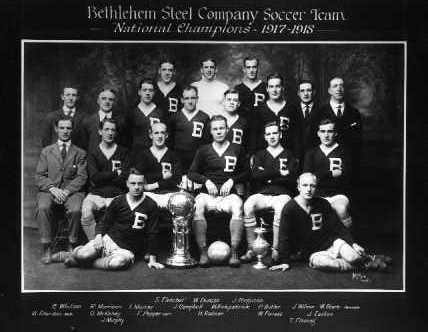
Similarly, Bethlehem Steel were the dominant club in the early years of the US Open Cup, previously known as National Challenge Cup. A Third Round 1-0 exit to eventual inaugural NCC champion Brooklyn FC in 1914 was quickly forgotten a year later as the club, founded in 1911, returned to capture the championship in its second running. Bethlehem Steel dominated the tournament on defense from the Third Round on, never allowing more than one goal against. They knocked off fellow Pennsylvania side Victor FC in the Third Round, 1-0, the closest contest of the campaign. They downed New Jersey’s Scottish Americans, 3-1 in the Quarterfinals, and dropped another state rival, Homestead FC, 4-1 in the semifinals. They met up with another Brooklyn side in the Final, winning their first championship 3-1, against Brooklyn Celtic.

The second title a year later was a little harder. Another Pennsylvania rival gave them a tough test early on again, as Disston A.A. forced a replay in the second round with a 1-1 draw. Bethlehem Steel would advance with a 3-0 win in the second leg. Philadelphia Hibernian were no match in the Third Round though, falling 6-0. Bethlehem Steel then began to face out of state competition, blanking New Jersey’s West Hudson A.A. 1-0 in the Quarterfinals. Pullman FC of Illinois forced another replay with a scoreless draw in the Semifinals, but Bethlehem Steel kept the run alive with a 2-1 victory. They moved on to win their second consecutive title, 1-0 against Fall River Rovers of Massachusetts in 1916. For the second year in a row they did not allow more than a goal in any game.

The 1916 Final marked the first of three consecutive championship meetings between the two clubs. For the third straight year, Bethlehem Steel went through the tournament without allowing more than a goal in a game, downing familiar faces in Brooklyn Celtic (Second Round, 3-1), West Hudson A.A. (Third Round, 3-0) and Homestead FC (Quarterfinals, 2-1) to reach the Semifinals. They then topped Joliet Steel Works of Illinois 6-0. Fall River, however, copied that playbook in their run and bested Bethlehem Steel, 1-0 in the 1917 championship, spoiling the three-peat bid.

1921 Bethlehem Steel team photo. Photo: BethlehemSteelSoccer.org

Though the tournament shrank with the military enlistment of players in the First World War, things remained the same on the pitch for Bethlehem Steel, as they swept through the tournament with an aggregate tally of 11-1 against their three opponents heading into the championship game against those Fall River Rovers. For the first time in four tournaments though, the club allowed two goals as the pair played to a 2-2 draw. Bethlehem Steel would claim their third title with a 3-0 victory in the replay two weeks later.

Bethlehem Steel made it four championships in five years with another dominant run a year later. Again, an early round contest proved the most difficult, as state foe Merchant Ship “A” battled the three-time champs in high scoring Second Round affair, becoming the first to score three goals against Bethlehem Steel in six editions of the tournament. It was not enough, as the favorites won out 4-3 and proceeded to not allow another goal in the tournament, topping New Jersey’s Paterson FC, 2-0, in the 1919 Final.

The run of consecutive championship appearances would come to an end in 1920 for Bethlehem Steel, exiting in the Quarterfinals at the hands of Robins Dry Dock 1-0, after 1-0 and 10-0 wins in the previous two rounds. Robins Dry Dock would go on to win the tournament a year later.

Bethlehem Steel began to make noise again in 1924, with a trip to the Semifinals before being knocked out by Fall River Marksmen, who went on to win the first of their four championships between 1924 and 1931. After taking the 1925 tournament off, Bethlehem came back in familiar form to capture their fifth championship in 1926. They dominated the Eastern Division portion of the bracket with a 12-4 aggregate over four games, again not allowing more than a goal in any game. This set up a meeting with Missouri’s Ben Millers in the Final. Archie Stark scored three goals to help lead the club to a 7-2 victory before a reported crowd of 18,000 at Ebbets Field, home of baseball’s Brooklyn Dodgers.

1918 Bethlehem Steel team photo. Photo: BethlehemSteelSoccer.org

The club would go on to reach the final four again the following year, the quarterfinals in 1929 and the semifinals in 1930 before folding due to the Great Depression.

While Fall River Marksmen came close to equaling their mark after the team dissolved, it would take nearly 50 years for another club to begin its run for five, despite other challenges from Philadelphia Ukrainians (4 titles in 1960, 61, 63, 66) and New York’s Greek American AA (4 titles in  1967, 68, 69, 74) as well.

A group formed by a group of Israeli expatriates for a simple Sunday recreation team turned competitive in the seventies, when a number of former Israeli national team players immigrated to the area and joined Maccabee AC (Los Angeles).

Much like Bethlehem Steel, defense was key in the Maccabee’s first title run as they swept through the Western Bracket of the tournament without allowing a goal in four rounds. They would defeat Cleveland’s Inter Italian 5-3 in the 1973 Championship.

The club returned to the Final two years later, downing New York City’s Inter-Giuliana, 1-0, for their second title. Maccabee AC would win its third two years later again, with a lopsided 5-1 victory against United German Hungarians of Philadelphia in the 1977 Championship.

The elusive repeat would finally come in 1978, with a 2-0 overtime victory against Connecticut’s Bridgeport Vasco de Gama for the Maccabees’ fourth championship. The club nearly won number five in 1980, falling 3-2 to New York Pancyprian Freedoms in New York, but would break through a year later against the Brooklyn Dodgers, with another 5-1 victory in the 1981 Final. A shot at holding the record alone at six was again spoiled by the Freedoms in 1982, as Maccabee AC were edged out in a 4-3 overtime affair in Chicago.

Bethlehem Steel’s status as the only five-time champion, however, could have easily been untouched until today. All five titles won by Maccabee AC from 1973-81 came during the era of the North American Soccer League, which existed from 1968-84. Perhaps the most famous and arguably most-talented professional league prior to Major League Soccer’s 1996 launch, the NASL did not compete in the US Open Cup, opening the door for the history-making run of the Israeli club.

Though overshadowed by the NASL at the time, one of highlight moments for the tournament and Maccabee AC during the era came in the 1978 Final. The match was held at Giants Stadium (The Meadowlands) in front of a crowd of over 30,000, as part of a doubleheader with the NASL’s New York Cosmos and Tampa Bay Rowdies – a game with a reported crowd of around 70,000.

On Tuesday, over 30,000 fans are expected to come out for a second consecutive year to see who will come out on top in the Battle for Open Cup History.

Filed Under: Feature - History, US Open Cup, US Open Cup History Tagged With: 2011 US Open Cup Final, Bethlehem Steel FC, Chicago Fire MLS, Maccabee AC, Seattle Sounders MLS

1938 National Challenge Cup Results

January 10, 2009 by Josh Hakala

First Round
Eastern Bracket
1/16/38 Kearny Irish 3 : 5 Bethlehem Hungarian
1/16/38 New York Americans 4 : 2 Brooklyn First Germans
1/16/38 Brooklyn Hispano 1 : 1 (aet) St. Mary’s Celtic (Brooklyn)
1/22/38 R St. Mary’s Celtic 4 : 1 Brooklyn Hispano
1/16/38 Paterson Caledonians 1: 0 Kearny Scots
1/16/38 Baltimore SC 2 : 1 Budd AA (Phi.)
1/16/38 German American SC (Phi.) 3 : 3 Passon SC (Phi.)
1/23/38 R German American SC 2 : 0 Passon SC
1/23/38 Brookhattan (NYC) 4 : 1 Hatikvoh (NYC)
1/30/38 Lusitania Recriation 3 : 3 Ponta Delgada
Western Bracket
1/16/38 Maccabee SC (Chi.) 2 : 0 (aet) American Nickeloid (Peru, IL)
1/16/38 Schlitz (Mil.) 6 : 4 Racine Deutscher (WI)
1/16/38 Castle Shannon (W. Pa.) 2 : 0 Heidelberg (W. Pa.)
1/16/38 South Side Radio (St. L) 3 : 2 St. Patricks (St. L)
1/16/38 Sparta Garden City (Chi.) w/o Shamrocks SC (St. L)
1/23/38 Bartunek Slavia (Cle.) 3 : 1 Cecil Merchants (W. Pa.)
1/30/38 Burke Undertakers (St. L) 5 : 4 St. Matthews (St. L)
2/13/38 Thistles SC (Det.) 5 : 1 Eckert & Becker (Det.)
   
Second Round
Eastern Bracket
1/30/38 New York Americans 4 : 1 Bethlehem Hungarian
1/30/38 St. Mary’s Celtic 7 : 1 Baltimore SC
1/30/38 German American SC 5 : 3 Paterson Caledonian
2/20/38 Brookhattan 7 : 0 Ponta Delgada
Western Bracket
1/30/38 Maccabee SC 2 : 1 Schlitz
1/30/39 Castle Shannon 3 : 0 Bartunek Slavia
2/6/38 South Side Radio 1 : 0 Burke Undertakers
2/20/38 Sparta Garden City 5 : 0 Thistles SC
   
Quarterfinals
2/20/38 Castle Shannon 4 : 2 South Side Radio
2/27/38 New York Americans 4 : 3 Brookhattan
2/27/38 St. Mary’s Celtic 1 : 1 (aet) German American SC
3/5/38 R St. Mary’s Celtic 1 : 0 German American SC
2/27/38 Sparta Garden City 1 : 0 Maccabee SC
   
Semifinals
3/27/38 1L New York Americans 2 : 1 St. Mary’s Celtic
4/2/38 2L St. Mary’s Celtic 3 : 0 New York Americans
St. Mary’s Celtic advance on 4-2 aggregate
3/13/38 1L Castle Shannon 1 : 2 Sparta Garden City
3/20/38 2L Sparta Garden City 3 : 1 Castle Shannon
Sparta Garden City advance on 5-2 aggregate
   
Final
First Leg – at Sparta Stadium – Chicago, Illinois
4/17/38 Sparta Garden City 3 : 0 St. Mary’s Celtic
Second Leg – at  Starlight Park – Bronx, New York
4/24/38 St. Mary’s Celtic 2 : 3 Sparta Garden City
Sparta Garden City win National Challenge Cup on 6-2 aggregate
KEY – w/o – Walkover, R – Replay, 1L – 1st Leg, 2L – 2nd Leg, 3L – 3rd Leg

Filed Under: US Open Cup Tagged With: 1938, Brookhattan, Castle Shannon, German American SC, Maccabee AC, New York Americans, South Side Radio, Sparta Garden City, Sparta Stadium, St. Mary's Celtic, Starlight Park

Primary Sidebar

Follow Us on Social Media

  • Bluesky
  • Facebook
  • Instagram
  • Twitter
  • YouTube

U.S. Open Cup History

1935 National Challenge Cup Semifinals: After 29 days, Central Breweries win 3-game Western Final

The Western Final of the 1934/1935 National Challenge Cup featured one of Chicago’s best teams from the first 30 years of the tournament against a St. Louis team that would form their own dynasty.

  • 1995 US Open Cup: Rob Ukrop of Richmond Kickers voted TheCup.us Player of the Tournament
  • 1995 US Open Cup Final: Jeff Causey of Richmond Kickers voted TheCup.us Player of Round
  • 1995 US Open Cup Final: Richmond Kickers survive heat, beat El Paso Patriots in PKs to win title
  • 1995 US Open Cup Final Preview: El Paso Patriots hosting amateur Richmond Kickers in “El Sauna”
  • 1995 US Open Cup Semifinals: Jake Arrambide of El Paso Patriots voted TheCup.us Player of Round

Analytics powered by

Copyright © 2026 • Built by Jacob Martella Web Development