• Skip to primary navigation
  • Skip to main content
  • Skip to primary sidebar
  • US Open Cup Central
  • US Open Cup Qualifying
  • US Open Cup History
  • Amateur Cup

Complete U.S. Open Cup Coverage

  • 2026 USOC Schedule
  • 2026 USOC Stat Leaders
  • 2027 USOC Qualifying Results
  • TheCup.us Awards
  • Join TheCup.us Patreon!
  • Contact Us

Meet the Underdogs

2009 Meet the USASA: Emigrantes Das Ilhas

August 21, 2009 by

“Immigrants of the Islands” making their first US Open Cup appearance

Translated into English from Portuguese, Emigrantes Das Ilhas means “Immigrants of the Islands”, but as manager/player Carlos Amado plainly states, it simply means “We’re from theCape Verde Islands.” The club was founded in 1987 and aside from two seasons with the Super N League, the team has played in the New England Luso American Soccer League, which was formed in 2001 after a merger of the LASA (Luso-American Soccer Association) and NESA (New England Soccer Association). Emigrantes were NELASA champions in 2004, and also won the 2008 Massachusetts state cup. Defeating fellow NELASA club Strela Negra for the honors.

Aside from their success in the USASA Region I Open Cup tournament, which earned them their first Lamar Hunt US Open Cup appearance. Emigrantes have also reached the Region I Amateur Cup final. Off the field, many of the younger players on the Emigrantes squad have been awarded scholarships to local colleges and universities due in part to their participation with the club. “We’re a non-profit organization and we rely on neighborhood goodwill and business-based funding for support,” Amado says of his club. “Currently we are actively seeking sponsorship to enable us to not only to continue to compete in NELASA, but to also satisfy our equipment and uniform needs.”

The roster for Emigrantes features many players with experience playing soccer abroad. Leading the way is Carlos Semedo. Semedo played briefly for the New England Revolution in 2002, and before that played professionally in Portugual for clubs like Clube de Futebol Estrela da Amadora and Vitoria Futebol Clube Setubal. Semedo was a part of the Portuguese team that won the European U18 Championship in 1999.the USASA Region I Open Cup tournament, which earned them their first Lamar Hunt US Open Cup appearance. Emigrantes have also reached the Region I Amateur Cup final. Off the field, many of the younger players on the Emigrantes squad have been awarded scholarships to local colleges and universities due in part to their participation with the club. “We’re a non-profit organization and we rely on neighborhood goodwill and business-based funding for support,” Amado says of his club. “Currently we are actively seeking sponsorship to enable us to not only to continue to compete in NELASA, but to also satisfy our equipment and uniform needs.”

DOUBLE VISION
USASA Region I qualifiers Emigrantes Das Ilhas and Dulles Sportsplex Aegean Hawks have found themselves in a unique situation. Both have advanced to the Region I Open Cup and Amateur Cup finals, which are both set to be played on June 21. On May 31, Emigrantes got there by defeating Pancyprian Freedoms 1-0, while the Hawks got by Baltimore Colts F.C. 3-1 in extra time.

Semedo was also the first Portuguese native to sign with an MLS club.

Captaining the club is Carlos Fernandes, who has played in the United Soccer Leagues (USL) with the Rhode Island Stingrays, New Hampshire Phantoms and Cape Cod Crusaders. Zico Veiga has been twice selected for the US National Amateur team, and has also represented Cape Verde on the Under-21 level.

Emigrantes cleared their Open Cup hurdle on May 24 by defeating Danbury United 4-2 in extra time. In 2007 it wasDanbury who qualified at the expense of Emigrantes via penalty kicks after a 1-1 draw. It looked as though history may repeat itself when Danbury tied the game at 2-2 on an 85th minute penalty kick. Prior to that, Emigrantes took a 2-1 lead on two goals from Zico Viega. However, Denivaldo DaSilva and Justin Fernandez came to the rescue for Emigrantes goals in the second overtime period.

“We were confident going to Connecticut because we felt that they were fortunate to beat us in PKs in Brockton (Mass.) (in 2007) and that it was a missed opportunity for our team,” Amado said. In fact, one of the goals of the club is to grow to the level that Danbury United has, both on the field and off. Danbury’s home field is a part of the Portuguese Cultural Center in Danbury,Connecticut.

Portuguese speaking clubs have had a strong history in the southern New England area, with its roots coming from immigrants from the Azores and Cape Verde Islands in the late 19th century. According to Roger Allaway’s book “Rangers, Rovers and Spindles”, the majority of the Portuguese speaking New Bedford, Massachusetts population came from the Western Azores andCape Verde via American whaling ships, while those who settled in Fall River hailed from theEastern Azores, and did so due to recruiting done by the Fall River textile industry. The 1947 Open and Amateur cup winning Ponta Delgada club, from Fall River, took its name from the capital of Sao Miguel, the island most of the towns’ Portuguese population came from.

While Cape Verde has yet to qualify for either the World Cup or African Cup of Nations, it has produced talents like Nani (Manchester United), Patrick Viera, Miguel (Valencia), Jair (New England Revolution) and Rolando (Porto). However, most of the top talent chose to represent other nations when they are eligible to do so.

Amado knows that his club’s First Round Open Cup game against the Western Mass Pioneers of the USL Second Division is more then just a chance to pull an upset. “This is an opportunity for some of our young players to display their talents and for us to make our Cape Verdeancommunity proud.”
Filed Under: Meet the Underdogs, US Open Cup, US Open Cup Qualifying Tagged With: 2009 Meet The USASA, 2009 USASA Qualifying, Emigrantes Das Ilhas, Massachusetts, USASA Region I

2009 Meet the USASA: Bavarian SC

August 20, 2009 by

When it comes to Bavarian SC and the US Open Cup, it’s more of a case of catching up with the Milwaukee club rather than meeting the team.

Bavarian SC is making its sixth appearance in the tournament during the Professional Era, a record for amateur teams in that span. In those five previous trips, they’ve won three matches and advanced to the third round in 2003. And before that, the club advanced to the final in 1994 — the last year before professional teams joined the tournament  —  before falling to San Francisco’s Greek-Americans.

So why has Bavarian SC been such a fixture in the US Open Cup?

“I think it’s a little bit of history and a little bit of player selection, too,” said Tom Zaiss, the club’s director of soccer operations. “We’ve always had a good mix of young and old, and I think that’s what, in this tournament, separates us from most.

“You can do well with a good, young PDL team as well, but I think in those squads they always lack a little bit of experience. And I think if you’re an older ethnic team, you might struggle because you don’t have the younger legs. We have a good mix of both.”

Zaiss, who played on Bavarian’s 1994 team and coached the 2003 side, said this year’s team is one of the youngest the club has fielded. Two local players who starred at UW-Milwaukee before going on to professional careers — Kyle Zenoni and Neil Dombrowski, both 25 — have returned to the area and have been standouts in the midfield.

“Kyle brings a lot of experience,” Zaiss said of Zenoni, who played in Sweden and Bolivia and also spent a season with the Minnesota Thunder in the USL First Division. “He’s played overseas for a long time in a lot of different countries, and adding kyle has definitely been a huge addition for us.”

Zenoni had two goals as Bavarian scored three times in the second half to beat the Iowa Menace in a USASA Region II semifinal on May 23 in Milwaukee to claim the US Open Cup berth.

Dombrowski, meanwhile, played for Rochester and Portland in USL1 and is part of the “first family” of the US Open Cup — this will be the ninth straight year a member of his family has played in the tournament.

His older brother Scott is his teammate with Bavarian, while younger brother Zeke figures to be in the lineup Tuesday when the Wilmington Hammerheads play host to the Charlotte Eagles in an all-USL2 matchup in the first round.

On the other end of the spectrum is Giovanni “John” Luna. He played his first match for the Bavarian Majors, as the team is referred to internally, back in 1988 and played in the 1994 US Open Cup final with Zaiss.

“He’s the elder statesman of the group, he’s obviously in the twilight of his career,” Zaiss said. “But we still have those guys that have been around for a long time. We’ve got us guys who were with us when we beat Des Moines (Menace of the PDL) in overtime (in 2003) … so we have guys who have been there, done that and can help the young guys out.”

Bavarian SC played Sunday in the Wisconsin Adult Soccer Association Major League — they remained unbeaten and atop the league standings — but six players missed the game to attend backup goalkeeper Eric Mickschl’s wedding. “So they’re all well-rested,” Zaiss said.

Zaiss said that Mickschl will miss Tuesday’s match at the Chicago Fire PDL in Bridgeview, Ill., as will several other players — including some starters — because the 5 p.m. CT kickoff time conflicts with their work schedules. But he’s still optimistic of Bavarian’s chances.

“I think that was a little bit of gamesmanship on Chicago’s side,” Zaiss said of the early kickoff. “They probably said, ’We’ve got a bunch of college guys, 5 p.m. on a Tuesday works for us.’ But we’ve got a lot of guys who work for a living, so it’s a little bit of a challenge. We lose a couple because of the kickoff time, and some of them would have started.

“Chicago will be trying to figure out who’s playing where, so I don’t want to give too much away, but I think we have a good group. Like I said, it’s a little bit younger than we’ve had, which is never bad, because from a fitness perspective, playing (Sunday) and then turning around and playing on Tuesday is always a challenge.”

Filed Under: Meet the Underdogs, US Open Cup, US Open Cup Qualifying Tagged With: 2009 Meet The USASA, 2009 USASA Qualifying, Bavarian SC, USASA Region II, Wisconsin

2009 Meet the USASA: Sonoma County Sol

August 20, 2009 by

The Sol were close to becoming two time defending NPSL champions, but losses in the ’07 & ’08 playoffs prevented that. “We use the previous losses as fuel.” Ziemer says of his team motivation for the NPSL season. The Sol may very well be paving the road for their first NPSL title. They are 6-0-1 in NPSL play with four games remaining, and are coming off a 10-1 thrashing of the Salinas Samba, their league rivals for many years.

After qualifying from the USASA Region IV tournament, they open the 2009 Lamar Hunt US Open Cup against the PDL’s Orange County Blue Star on June 9.

The team is truly a family affair, in many ways. First is the way the club is funded. Each player pays $500 each for the season, and they also raise money through hosting a golf tournament, and having friends and family volunteer on game days. Also helping fund the team is the Sol “100” Club, in which individuals who donate $100 towards the team receive a season pass, having their name mentioned on the team website and being honored at the final home game of the year.

In addition to running the club as a team, almost all of the players on the roster are locals. Many players have played, or still play, at Sonoma State, where Sol head coach Benjamin Ziemer is an assistant coach, under his brother Marcus, who has been head the head coach at SSU for 18 seasons. The other players on the team either attend Santa Rosa Junior College, or are local players who have played college soccer elsewhere.

Ziemer recalls when he applied to coach the Sol two years ago. “I told the board we could compete using primarily local players.” The success of the Sol has proven he was correct. “Although not all believed it (was) possible, we have 16 players from Sonoma County, another 5 who have been here 5-6 years to attend Sonoma State University and a few others who have moved from out of town for work.” Ziemer says.

On top of all that, Benjamin Ziemer and his three brothers grew up playing the game, and then some. As kids, they played the game on a small field their father built for them, which included lights, playing 1v1 and 2v2 for hours until they all moved away from home. When the boys were in their teens, a man named Peter Reynaud moved into their area, and the way they viewed and played soccer changed. Reynaud was the head coach at Sonoma State, and exposed the boys to a different way of training and playing.

Three of the brothers, Benjamin, Andrew, and Christopher, went on to play for Reynaud at Sonoma State for the 1989-90 season, and then for their brother Marcus for the 1990-91 season, when Reynauld stepped down to concentrate on the women’s team. During that first year, Sonoma State went undefeated, and the following year both the men’s and women’s teams reached the NCSAA Division II championship game.

While Marcus stayed on as head coach at Sonoma State, the other three Ziemer boys eventually made their way to Germany. The first to go was Christopher. After their father decided the cost of another regional camp was not worth the money. Right around this time a German team came to the area and played against Christopher’s ODP team, after which their father asked the German coach if he could set Christopher up with a youth team. Christopher then went to Germany and soon after called Andrew and Benjamin to come join him. Soon the three were playing in the 3rd and 4th division in Germany, the country where their father was born.

Andrew then went to Holland to study soccer and attend coaching courses, but he ended up playing with Quick Den Haag – a top level amateur club. While there he went to Ajax a few days a week to watch professional and youth trainings. During this time he met Frans Hoek, who working at Ajax. Frans has assisted the Ziemer brothers in studying at 50+ clubs in Holland, Spain, Belgium, Germany, England and Italy. Together, the brothers run Ziemer Brothers Soccer, where Benjamin has directed over 150 camps in Northern and Southern California, Oregon and Nevada.

In addition to all of that, Benjamin has also coached for the Olympic Development Program (ODP) State Teams, been a Hoek Method Camp coach for over eight years, currently holds a USSF ‘A’ coaching license and German ‘B’ license, currently manages the NorCal Premier Soccer League, and was recently named the boys soccer coach at Sonoma Academy.

One could say that the Sol and Sonoma State are one in the same. Three players on the Sol roster, Chris Daly, Tim Maycock and Brandon Boone, were on the team when that won the NCAA Division II Championship in 2002.

One player they will do without is Ross Middlemiss. After leading the CCAA in scoring this year with 18 goals and 45 points on his way to First Team All-American honors and capturing the Division II West Region player of the year honor, Middlemiss began the season with the Sol. Soon after, he was presented the opportunity to play for TSG Thannhausen of Oberliga Bayern (German fifth division). Middlemiss has left the team to prepare for his trip to Germany.

Another standout from Sonoma State’s 2008 campaign, were they were ranked #6 in the nation with a 15-2-4 record while winning the CCAA Championship, is Eric Lafon. Lafon currently leads the Sol with seven goals and six assists, and became SSU’s All-Time Assists Leader with 33 total assists. The team also has some veteran presence as well. Local product Shawn Percell led Santa Clara to the 1999 NCAA Final, and earned Final Four MVP honors. He has spent some time with Belmopan Bandits in Belize, before returning to the states to play with the Seattle Sounders for three seasons.

However, when asked who his standout players are, Ziemer has just one answer, “Our standout is the team.” Those words sum up what the NPSL club is all about, on and off the field.

Filed Under: Meet the Underdogs, US Open Cup, US Open Cup Qualifying Tagged With: 2009 Meet The USASA, 2009 USASA Qualifying, NPSL, Sonoma County Sol, USASA Region IV

2009 Meet The USASA: Arizona Sahuaros

August 20, 2009 by

The Arizona Sahuaros pose for a team photo with Boca Juniors of Argentina as part of the 2007 Copa PanAmericana. The Sahuaros played exhibition games against Boca and Mexican clubs Cruz Azul and Club America.  Photo: Arizona Sahuaros.
The Arizona Sahuaros pose for a team photo with Boca Juniors of Argentina as part of the 2007 Copa PanAmericana. The Sahuaros played exhibition games against Boca and Mexican clubs Cruz Azul and Club America. Photo: Arizona Sahuaros.

You might be hard pressed to find a bigger soccer advocate in the state of Arizona than the manager of the Arizona Sahuaros, Petar Draksin. The Grand Canyon University coach doesn’t get paid to manage the Sahauros, a club that has existed continuously, in many forms, since 1989. He also “will never give up” in his effort to bring high-level professional soccer to the city that he loves and works tirelessly to help his players move on to the next level.

This is the third time in the last four years that Draksin has led his team through USASA Region IV qualifying into the Lamar Hunt US Open Cup. This year marks the fifth year that the club has qualified as a franchise. What makes that feat remarkable is that this year, just like their 2006 appearance, they have qualified without being affiliated with a league.

This year, the club is on hiatus from the National Premier Soccer League (NPSL) due to the fact that the league lacks enough teams in the Southwest. Arizona and San Diego United are the lone teams in that part of the country and both are sitting this year out. San Diego is playing in a local league, while Arizona is just playing exhibition games and tournaments.

“Our location is a challenge,” said Draksin. “We’re waiting for the NPSL to find teams in this area, so that travel costs won’t be such a burden.” He added that cities like El Paso and Albuquerque would be a good fit for the league.

There are plenty of local teams in the USL’s Premier Development League, but he said financially it just doesn’t work right now. “If the USL had the right financial situation, we would love to join the PDL,” said Draksin, who has a tremendous respect for the league.

The club has a very committed ownership group, but at the same time, with the economy being what it is, having to travel to places in the NPSL Western Conference like Northern California and Oregon was just too much. “We’re very lucky to have the ownership we have, but right now, playing exhibitions and competing in the Open Cup is all they can allow right now.”

SAHUAROS HISTORY
The Sahuaros have had three name changes and have played in three different leagues (as well as spending time without a league) in their 21 years as a club.

1989-92: Phoenix Hearts (Indoor)
1990-91: Phoenix Hearts (PDL)
1992-95: Arizona Cotton (PDL)
1996: Arizona Phoenix (PDL)
1997-02: Arizona Sahuaros (D3 Pro)
2003-04: MPSL
2005-07: No league
2008: NPSL
2009: No league

Draksin moved to New York City in 1976 from his native Yugoslavia. There he was thrust into the thriving club soccer scene in the city, which was dominating the Open Cup at the time. Between 1967 and 1984, the Open Cup tournament was won by a team from New York or New Jersey 12 times. Draksin describes playing at the historic Metropolitan Oval as an experience he’ll never forget as he played for the German Hungarians and the Brooklyn Italians.

He relocated to Phoenix where he has been the head coach at Grand Canyon University for almost 20 years, and has overseen the Sahuaros from the beginning. The franchise started in 1989 as an indoor team called the Phoenix Hearts and three name changes and three different leagues later, the Sahuaros are celebrating their 21st year as a club.

If two games would have gone their way over the last few years, this story would be discussing Arizona’s fifth straight Open Cup berth. The only qualifying efforts that fell short were in 2005 and 2007 when they lost to the team that advanced to the Open Cup from Region IV.

This year, it was a scoreless draw against Miran (California South) on the final day that was the club’s third near miss, leaving them two points shy of winning the group and moving on to the Cup. However, it was determined that there were multiple players on the Miran roster who were ineligible. This wasn’t discovered by Arizona until after their match was completed and the Region IV rules state that you cannot file a protest after the match is over. Therefore, the Sahuaros and the other clubs in the tournament, petitioned Region IV semifinalists Sonoma County Sol to file a protest on their behalf before the final. The protest was upheld, Miran was disqualified and the Sahuaros took their place in the US Open Cup.

ALMOST…
After winning the USASA Region IV tournament in 2008, they qualified for the national cup finals in Seattle. There they were defeated in the national championship game 2-1 in extra time by the New York Pancyprian Freedoms from Region I.

“There are rules that everyone has to follow,” said Draksin, who left as many as four players off his tournament roster due to eligibility issues. “Sonoma did the right thing to protest. Miran is a very good club and it was a learning experience for everyone.” He added that the rule that you can’t protest after a match is complete is one that needs to be evaluated and changed for future tournaments. This situation caused the Sahauros to miss out on an opportunity to play for the national finals, but Coach Draksin says he wasn’t that disappointed because he values the Lamar Hunt US Open Cup above all over competitions.

Last year’s run in the Open Cup was one that Draksin and his club will cherish. After qualifying on a goal difference tiebreaker with Sonoma County Sol (Arizona was a +5, Sonoma was a +4), the Sahuaros earned a home date with the Seattle Sounders of the USL First Division. It was 117 minutes of scoreless soccer in Phoenix as the Sahuaros battled with one of the top clubs in USL-1. Seattle wasn’t taking Arizona lightly as they brought their full compliment of players to the desert that night. Finally in the 118th minute, Kenji Treschuk scored the winner for the Sounders to save them from the uncertainty of penalty kicks.

According to Draksin, Seattle head coach Brian Schmetzer said his team was “lucky” to get out of Grand Canyon University with the win, which the Sahuaros head coach took as the highest compliment from a team of that quality.

Sahuaros player Carlos Gomez (left), Mexican international Jared Borgetti and Arizona head coach Petar Draksin pose for a picture after Cruz Azul and the Sahuaros played an exhibition game in 2007.  Photo courtesy of Arizona Sahuaros.
Sahuaros player Carlos Gomez (left), Mexican international Jared Borgetti and Arizona head coach Petar Draksin pose for a picture after Cruz Azul and the Sahuaros played an exhibition game in 2007. Photo courtesy of Arizona Sahuaros.

One of the keys to his team’s success over the years has been treating players right. Draksin knows that not being in a league, his players might not get as much exposure playing for the Sahuaros, so he helps players find homes with other teams, even though it hurts his squad to lose key members of his team. He currently has players suiting up for PDL teams like 2009 Open Cup entrant Orange County Blue Star and the PDL champion Thunder Bay Chill. Probably their highest-profile alumni is Roger Espinoza, the Ohio State University standout who currently plays for the Kansas City Wizards of Major League Soccer, as well as the Honduras National Team.

The 2009 roster features a variety of players, ranging from former professionals to local youth players.

The strength of the team is the defense, led by goalkeeper Brad Swenby from the University of Wisconsin-Milwaukee. After a few seasons as the backup for the Minnesota Thunder of the USL First Division, he is playing for Arizona and is keeping an eye out for a USL job. In front of him is veteran Carlos Gomez, former Cincinnati Kings defender Jake Slemker and promising young outside back, Nick Sykes.

On the attacking side of the ball the Sahuaros return a veteran with Dominic Papa who scored a pair of goals for the club in the 2006 Open Cup. Phillipe Garre (Gonzaga University) and Imad Id-Deen, who played for Banat Arsenal (USASA Region IV) during the 2007 tournament, will also factor into the offense.

Playing a fellow amateur club in the opening round is always better than playing a professional team, especially an amateur team that they know.

“We’re very familiar with the El Paso Patriots franchise and their style of play,” said Draksin. “We feel that we have a chance to win on Tuesday.”

Filed Under: Meet the Underdogs, US Open Cup, US Open Cup Qualifying Tagged With: 2009 Meet The USASA, 2009 USASA Qualifying, Arizona, Arizona Sahuaros, USASA Region IV

2009 Meet the USASA: Atlanta FC

August 20, 2009 by

Ramiro Canovas (Argentina / Mercer University) led Atlanta F.C. in scoring during their inaugural season in 2008. Photo by Alejandro Calderon
Ramiro Canovas (Argentina / Mercer University) led Atlanta FC in scoring during their inaugural season in 2008. Photo: Alejandro Calderon

With only a few exceptions, expansion teams always take time to get off the ground. Atlanta FC of the National Premier Soccer League (NPSL) appears to be one of those exceptions. In only their second year of existance, they have punched their ticket to the 2009 Lamar Hunt US Open Cup and will face the USL First Division’s Charleston Battery in the First Round at Blackbaud Stadium on June 9.

Last year, they fell one point short of winning their group in the USASA Region III tournament, which would have earned them a spot in the Open Cup. This year, they left little to chance, winning all three group games, while only allowing one goal.

The team was formed in 2007 when current head coach Ricardo Montoya and director of operations Jason Longshore were working together through the program Soccer In The Streets in Atlanta. The duo organized an under-23 team called Lawrenceville FC to compete in the 2007 Region III tournament and not only did they become the second team from Georgia to ever win the event, but they moved on to finish as the national runner-up, falling to a team from Oregon in the final.

The year after, in their debut season in the NPSL, they won the Southeast Division championship, only to fall in the divisional round of the playoffs.

“Ricardo and I have a shared passion for the game and playing it the right way,” said Longshore, who previously had worked with the now-defunct Atlanta Ruckus in the mid-1990s. “We both get frustrated with teams who come out playing not to lose and we wanted to bring a team to Atlanta that played an exciting, attacking style.”

An additional challenge of the club in the first two years is the fact that Montoya coaches a team that features players representing 14 different countries. He has been coaching in the local Atlanta Latino leagues for a number of years.

“Ricardo is a guy that you will see at the next level someday soon,” said Longshore. “The way he can bring together a team with so many different backgrounds really amazes me.”

REMATCH?
Atlanta FC and Lynch’s FC both qualified for the US Open Cup by advancing to the USASA Region III final. Lynch’s FC won the game 4-3 and will move on to represent the region at the national finals in Sanford, Fla. The way the bracket is set up, the two teams could face each other again in the Second Round if they can both pull off an upset of their First Round opponents. No small task, since a USASA team has only defeated a USL-1 team twice since 1995.

The roster is made up of, like many amateur clubs at this level, a mix of former professionals, college players and local talent. Ramiro Canovas from Argentina, an All-Conference player from Mercer University, was the club’s top scorer last year. Englishman Paul Buckley was an NAIA All-American and spent time with the short-lived Syracuse Salty Dogs franchise in the A-League. Another player with professional experience is Robert Munilla who suited up for Racing and Wanderers of Uruguay’s top league, the Primera División.

Some of the up and coming youngsters on the team include Georgia State standout Lalo Liza from Peru, 18-year old Junior Sandoval from Honduras, 20-year old Julio Anzueto from Guatemala, and 17-year old American Matias Montalbetti. The leading scorer thus far in 2009 is 21-year old Leo Sanchez (Mexico/US) who has seven goals to his credit.

With a fearless, attacking style of soccer, the club is confident that they can give the Charleston Battery a run for their money in the First Round.

“We’re not afraid going into the match,” said Longshore, who says the team has been using USLLive.com extensively to familiarize themselves with the Battery. “This is an opportunity that our players and staff have been working so hard for every night at practice. For our young players, it’s a chance to get noticed. For our veterans, it’s a chance to show that they can play at any level. For our club, it’s a chance to make a name for ourselves.”

Filed Under: Meet the Underdogs, US Open Cup, US Open Cup Qualifying Tagged With: 2009 Meet The USASA, 2009 USASA Qualifying, Atlanta FC, Georgia, USASA Region III

2009 Meet the Underdogs: 402 from Nebraska

August 19, 2009 by TheCup.us Staff

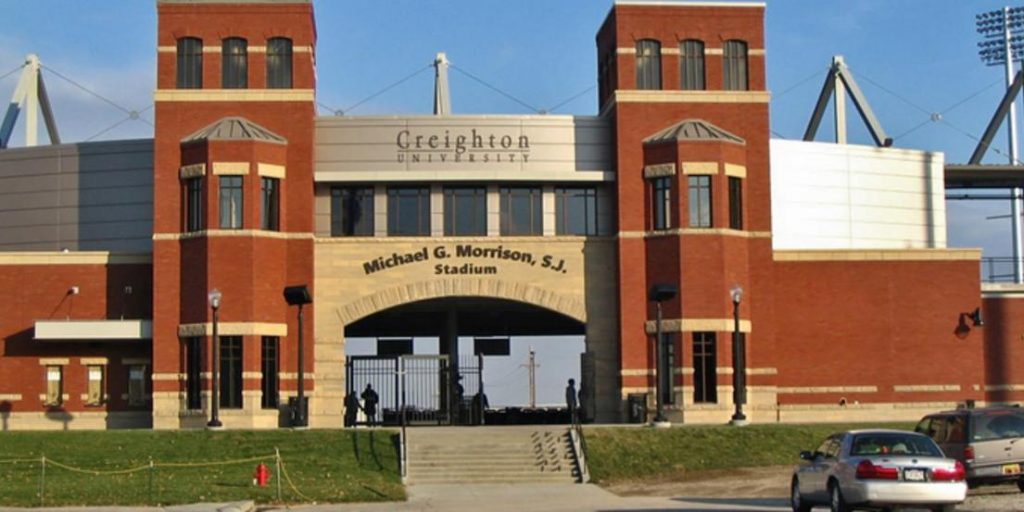
Creighton University's Morrison Stadium. File Photo: Creighton University
Creighton University’s Morrison Stadium. File Photo: Creighton University

When discussing the hotbeds of soccer in the US, Nebraska usually doesn’t enter the conversation.

But Jason Mims will tell you that when it comes to adult soccer in the state what’s been lacking is organization, not talent.

“No one ever thinks of Nebraska soccer as any good,” Mims said, “but there are some good players and good coaches.”

Thanks to Mims, some of the state’s top players will get the chance to show that on a national stage in the US Open Cup. He put together the 402 team, which is named after the area code for the eastern part of Nebraska.

“There’s so many good players around, and we always had guys playing in men’s leagues and pickup games and stuff, but we’ve never done anything officially organized,” said Mims, a former Saint Louis University player who is heading into his ninth season as an assistant coach for the Creighton men’s program — a regular in the Top-25 rankings each fall.

“I just figured this year was a good year to organize it, get the right players and kind of do something official.”

Most of the players on the 402 roster are former Creighton players who continue to live in the Omaha area, and several of them have been involved in professional soccer — including two players who were especially pleased to see the team drawn to play at the Minnesota Thunder of the USL First Division in a first-round match Tuesday night in Blaine, Minn.

One is forward Johnny Torres, who was a two-time national player of the year for the Bluejays and the fifth overall pick in the 1998 Major League Soccer College Draft by the New England Revolution.

Torres had 10 goals in 113 games in parts of five seasons in MLS, also spending time with the Miami Fusion and the Chicago Fire, before signing with the Thunder. The native of Colombia scored 19 goals in 47 matches for Minnesota over the 2002 and 2003 seasons, then headed to Milwaukee Wave United and scored 11 times in 2004.

Now 33, Torres is back at Creighton as an assistant under coach Bob Warming along with Mims. He can still put the ball the net, as evidenced by his hat trick in 402’s 5-3 extra-time victory over Illinois’ RWB Adria — a US Open Cup qualifier the past two years — in the semifinals of the USASA Region II tournament last month.

“I think he’ll have some friends and family there, and I think he’s looking forward to getting back for a day and seeing his old place,” Mims said. “He’s excited because they finally got rid of that stupid track that was around the field (at the National Sports Center), that’s the first thing he said. … Hopefully, he’ll get one or two chances to put one away.”

It also will be a homecoming — and perhaps a farewell — for Andrei Gotsmanov.

The midfielder grew up in Eagan, Minn., and starred at Woodbury High School before a standout college career that started at St. John’s and finished at Creighton and has close connections to the Thunder.

Gotsmanov’s father, Sergei, played professionally in the Soviet Union, England and Germany and for the USSR and Belarus national teams before finishing his career with the Thunder in the late 1990s. Andrei’s older brother Sasha also played for the Thunder in 2006 and 2007 after a spending a season with the Colorado Rapids of MLS.

Andrei Gotsmanov was a first-team All-American for Creighton last fall and was a semifinalist for the Hermann Trophy, given to the country’s top player. He was picked by the Revolution with the No. 24 overall pick in this year’s MLS SuperDraft, but it appears that his immediate future lies in Europe.

“He’s not going to go to New England, he’s going to go on trials in Sweden and Denmark in the next month or so,” Mims said. “This will kind of be his last game with us. I think he’s looking forward to getting back home and playing in that game in front of his dad and his family. It should be exciting for him.

“He’s a classy midfielder. I’ve been at Creighton nine years now, and he’s the best pure midfielder we’ve ever seen. He’s a pure No. 10. The kid is incredible. Hopefully, at some point he’ll get a chance to be a good professional and end up hopefully being on our national team. He’s that good.”

Also on the 402 roster are two former Creighton players who were drafted in 2008: midfielder Tony Schmitz was picked by DC United in the fourth round of the SuperDraft, while forward Tim Bohnenkamp was taken by San Jose in the second round of the supplemental draft that year.

Mims said the team draws from a player pool of about 30. But as is the case with many amateur teams, it’s usually pretty simple to make a game-day roster: “If they can make the game on that day, that’s who goes on the trip,” said Mims, who also plays left back in addition to managing the side.

The team has had varying success with its training sessions, having as many as 20 players show up and as few as four. Case in point: Mims, Torres and 402 forward Tim Walters, who completed his playing career at Creighton last fall and is now a student assistant coach in the program, recently spent 10 days in Peru on a trip with the Bluejays.

Needless to say, 402 didn’t train during that time.

“We hardly train at all, so we’re definitely not in shape,” Mims said. “But our guys are experienced enough to keep the ball and hold on to the ball, and that’s why we’ve been successful.

“I hope that we don’t get embarrassed up there. I don’t expect to win. Those guys are pros and they get paid and they train every day and they’re in midseason form right now … They should be able to beat us. So we don’t expect to win, but we do expect to compete. … I think we have a good enough group of guys that we can go up there and compete.”

Filed Under: Meet the Underdogs, US Open Cup, US Open Cup Qualifying Tagged With: 2009 Meet The USASA, 2009 USASA Qualifying, 402, Nebraska, USASA Region II

2007 Meet the USASA: El Paso Indios USA

April 2, 2007 by Josh Hakala

El Paso Indios USA logoThe recent trend of foreign clubs fielding teams in the lower division leagues in the United States is evidenced in this year’s U.S. Open Cup. Of the four clubs in this year’s tournament affiliated with foreign clubs, three are professional (CD Chivas USA, California Victory and Crystal Palace Baltimore). The fourth is El Paso Indios USA, an amateur club from the NPSL, who are affiliated with Indios de Ciudad Juarez of the Mexican Primera División A (second division).

While situated on the other side of El Paso, Indios USA have entered a territory long held by the USL’s Patriots, who have been around since 1989. Indios USA general manager Mitch Doblado sees the Patriots as both competitors and a club Indios USA can co-exist with in El Paso.

“I think having two soccer organizations only increases the awareness of soccer in El Paso, and the United States,” Doblado says. “However, we are both competing for the entertainment dollar, so we are in the same category as the El Paso Diablos (Double-A minor league baseball), and other family entertainment venues.” The team also attracts many fans of the parent club Ciudad Juarez, which is just over the border from El Paso.

While Indios USA’s parent club is in Mexico, they are nonetheless working hard to help the community in El Paso. The team has an agreement with Playground Connection, to help raise money to build a playground for children with disabilities, the first of it’s kind in El Paso.

Not just a nickname

The name Indios is comes from the Tarahumara Indian culture, which the logo symbolizes with a koyera around a soccer ball. The koyera is utilized by men, women and children born with honor in the community. Even the colors of the club’s logo have different meanings. The color red represents action, aggression, passion and danger. White represents purity, unity and wisdom, and black represents elegance and seriousness.

As far as the players who make up Indios roster, the roster is a mix of players from the Indios youth system, as well as local high school soccer programs. Two players have already appeared with the parent club in Juarez, forward Jose De Santiago, and Omar Tena, who is a high school senior from El Paso. Eugene Brooks, the team’s main scoring threat, is a native of El Paso and played at the college level in California. Finally, the team has a player with Open Cup experience. Ugljesa Vrbica, a native of Serbia & Montenegro, played with the 2006 Cup entrant Arizona Sahuaros last season.

Indios USA also features a youth program that ranges from U-6 through U-15, and their U-13 team is ranked in the top ten in the nation. Doblado says one advantage Indios has over the Patriots is the fact that their players have the opportunity to advance to their affiliated clubs, Ciudad Juarez and Pachuca.

Looking to make their mark

The team is off to a fast start in NPSL play, sitting in first place with a 4-0-1 record in the Southwest Conference. Indios USA also went unbeaten in the Region IV qualifying tournament, finishing 2-0-1 in group play. In the semifinals, they knocked off the Arizona Sahuaros 3-1 to qualify for the Open Cup. In the final, they defeated Banat Arsenal 3-2 for the right to represent Region IV in the USASA National Cup finals in Seattle later this summer, a feat the club takes a lot of pride in.

“To be able to represent the NPSL and Region IV in Seattle is something that we take very seriously,” Doblado said proudly. “It is important to have a good representation from a league and demographic standpoint.”

As far as facing the USL First Division’s Minnesota Thunder, Doblado is hopeful, yet realistic. “It will mean a lot to our young league and new program to be able to succeed to the next round. We know we are viewed as the underdogs but will give it all we have.”

Filed Under: Meet the Underdogs, US Open Cup, US Open Cup Qualifying Tagged With: 2007 US Open Cup, El Paso Indios USA

  • « Go to Previous Page
  • Page 1
  • Interim pages omitted …
  • Page 10
  • Page 11
  • Page 12

Primary Sidebar

Follow Us on Social Media

  • Bluesky
  • Facebook
  • Instagram
  • Twitter
  • YouTube

U.S. Open Cup History

1935 National Challenge Cup Semifinals: After 29 days, Central Breweries win 3-game Western Final

The Western Final of the 1934/1935 National Challenge Cup featured one of Chicago’s best teams from the first 30 years of the tournament against a St. Louis team that would form their own dynasty.

  • 1995 US Open Cup: Rob Ukrop of Richmond Kickers voted TheCup.us Player of the Tournament
  • 1995 US Open Cup Final: Jeff Causey of Richmond Kickers voted TheCup.us Player of Round
  • 1995 US Open Cup Final: Richmond Kickers survive heat, beat El Paso Patriots in PKs to win title
  • 1995 US Open Cup Final Preview: El Paso Patriots hosting amateur Richmond Kickers in “El Sauna”
  • 1995 US Open Cup Semifinals: Jake Arrambide of El Paso Patriots voted TheCup.us Player of Round

Analytics powered by

Copyright © 2026 • Built by Jacob Martella Web Development