• Skip to primary navigation
  • Skip to main content
  • Skip to primary sidebar
  • US Open Cup Central
  • US Open Cup Qualifying
  • US Open Cup History
  • Amateur Cup

Complete U.S. Open Cup Coverage

  • 2026 USOC Schedule
  • 2026 USOC Stat Leaders
  • 2027 USOC Qualifying Results
  • TheCup.us Awards
  • Join TheCup.us Patreon!
  • Contact Us

2024 US Open Cup

2024 US Open Cup Handbook: Hosting fees based on match revenue, more travel money, “ringer” rules

March 13, 2024 by Jake Sillick

New Mexico United fans. File photo by New Mexico United

After many months of negotiations, the US Soccer “Board Open Cup Subcommittee” has come to an agreement with the professional leagues, mostly Major League Soccer, on the format for the 2024 Lamar Hunt US Open Cup.

As reported by many other media outlets, these changes also included increased travel reimbursements for visiting teams and a new structure for tournament hosting fees. TheCup.us has recently gotten a copy of the 2024 US Open Cup Tournament Proper Handbook which outlines both of these items in detail, along with many more organizational and operational items that have been changed from 2023.

Hosting Fees

For a majority of the US Open Cup’s Modern Era (1995 to present), teams paid a fee for hosting a match to the Open Cup operation budget. This covered the tournament prize money, referee payments, and the travel reimbursements. Typically, this was a set amount of money based on the round of the competition and then a percentage of net event revenue above a certain threshold.

This process has been greatly simplified going forward, with the first three rounds only having a set fixed fee, and then rounds afterwards based on all Event Net Revenue. See the table below for changes. Event Net Revenue is defined as Gross Ticket Revenue less State & Local Taxes. Gross Ticket Revenue is all money paid for admission, including but not limited to standard tickets, premium/suite/hospitality tickets or a pro-rated portion of a season ticket package or membership.

Round2023 Fees2024 Fees
First Round$750 + 15% of Event Net Revenue above $100,000$1,000
Second Round$2,500 + 15% of Event Net Revenue above $100,000 $1,000
Third Round$5,000 if match did not involve a MLS team, $12,000 if it did + 15% of Event Net Revenue above $100,000$5,000
Round of 32$18,000 + 15% of Event Net Revenue above $100,00030% of all Event Net Revenue
Round of 16$25,000 + 15% of Event Net Revenue above $100,00040% of all Event Net Revenue
Quarterfinals$50,000 + 15% of Event Net Revenue above $100,00040% of all Event Net Revenue
Semifinals$100,000 + 50% of Event Net Revenue above $150,00040% of all Event Net Revenue
Final$325,000 + 50% of Event Net Revenue above $375,00040% of all Event Net Revenue

Travel Reimbursements

Going forward, the changes from the hosting fees (shown above) will allow for larger travel reimbursements for visiting teams, with larger limits set deeper into the tournament (See the table below for full changes). Also, keep in mind the traveling party for 2024 is 28 individuals, up one from 27 individuals in previous years (more about that below)

Round2023 Reimbursement Limit2024 Reimbursement Limit
First Round$15,000 $20,000*
Second Round$15,000 $20,000*
Third Round$15,000 $25,000*
Round of 32$15,000 $45,000*
Round of 16$15,000 $45,000*
Quarterfinals$15,000 $60,000*
Semifinals$15,000 $60,000*
Final$30,000 $90,000*


In addition, if any traveling club hits their cap for a match, additional reimbursement may be issued if the tournament total Gross Ticket Revenue is above $6.75 million dollars. 30% of all money above that amount may be given out until teams are whole or no more money is left.

Example: If tournament Gross Ticket Revenue is $7.75 million, then $300,000 (30% of $1,000,000) is added to the reimbursement pool. Teams that hit the cap for the round will be given extra reimbursement on a pro-rated basis if they were not made whole.

Additional changes include: Allowing for charter flights to be reimbursed, which are still subject to the maximum limit per team per round, and an increase in meal per diem maximum from $75 per person to $100 per person (still a max of 2 days / 6 meals)

Flights will only be reimbursed if the distance of the flight itself from origin to destination is more than 250 miles one way. This is an increase from 200 miles in 2023.

Hotels and meals will only be reimbursed if the trip is at least 150 miles one way. This is an increase from 120 miles in 2023. Ground transportation is covered regardless.

Teams may also apply for a hardship waiver to have more than the maximum limit covered if the rates for hotels and flights are “excessive due to market conditions”.

Increase in bench staff

The number of team staff members allowed on field on the team’s bench has been increased from nine (9) persons to 10. Each team will be allowed to select not more than seven (7) staff members, two (2) certified athletic trainers and one (1) team physician on the bench for a total of 10 individuals. Previously, there was no specification on the types of staff members on the bench, as in all nine staff members could be coaches.

Roster Rules

Two major roster rules have been changed for 2024, one for the Open Division teams from Local Qualifying, and one for the MLS NEXT Pro reserve teams.

Teams that entered via the Open Division Qualifying Rounds (fall qualifying) have had rosters expanded from 25 to 30 players.

For MLS NEXT Pro teams which are owned by or roster materially managed by a higher division MLS team, there have been special rules added for loans from the first team to the reserve team.

Normally, short term loans from other U.S. clubs (defined as less than 90 days) are not allowed in the Open Cup except when the loan comes from a foreign club, or comes from a reserve pro team up to the first team.

With reserve teams now back in the tournament, but no corresponding first team that is also playing, US Soccer set some additional rules for loans that come from the first team down to the MLS NEXT Pro team playing in the Open Cup. These are important because while the loan still has to be at least 90 days, there is no provision against recalling and ending that loan early at any point.

  • In addition to the eligibility rules noted above, players on contracts with MLS first teams may play for their club’s MLS NEXT Pro team only in the following circumstances:
    • The loan (of at least 90 days) must be confirmed to U.S. Open Cup staff and announced by the team and/or league no later than 2 p.m. CT the day prior to the match.
    • Player must not make a salary above the MLS first-team league maximum salary budget charge (unadjusted for allocation money, designated player status or any other roster mechanism).
    • Player must not be averaging more than 15.0 minutes per game in MLS first-team league matches up though the Match Day immediately preceding an Open Cup match.
    • No more than seven (7) players on loan from an MLS First Team to an MLS NEXT Pro team can be included in an 18-player game-day roster for an MLS NEXT Pro team. In the event of hardship, MLS NEXT Pro teams may apply to the Commissioner to include more than seven (7) players.

Procedure of Draws

With the new format, the draw procedure for each round has been adjusted.

First Round: Teams were paired geographically with the restriction that teams from the same Division (Division III) cannot be paired to play each other. Instances where a logical geographic fit doesn’t exist will be resolved by random selection. If three or more teams are from the same proximity, pairings for these teams will be made by random selection.

Second Round: The 32 teams advancing from the First Round will be paired geographically, with no restrictions. Instances where a logical geographic fit doesn’t exist will be resolved by random selection. If three or more teams/pairings are from the same proximity, pairings for these teams will be made by random selection.

A note for the first two rounds: In a random selection scenario, the random selection will be completed so that teams that faced each other in the previous edition of the competition avoid being paired in back-to-back editions.

Starting in the third round is when the draw groups come into play.

Third Round: There will be geographic groups of 4 to 6 teams, with exactly 50% of each group being USL-C teams entering in the Third Round. All USL-C teams will be drawn to face a Second Round winner and not another USL-C team. Any teams who are precluded from playing each other until the Final will not be placed in a group where they could be paired. Instances where a logical geographic fit doesn’t exist in determining the groups will be resolved by random selection.

Round of 32 and Round of 16: This is where the 4 team “mini brackets” come into play. There will be 8 mini brackets of 4 teams, and each bracket will have exactly 1 MLS team, 1 SEEDED USL-C team that enters in the Round of 32, and 2 winners from the Third Round. Groupings from the Third Round will have no bearing on this draw. The brackets will be as geographic as possible. Within the brackets, there are no restrictions on matchups. The Round of 16 match-up will be the winners of the two games within the bracket.  Instances where a logical geographic fit doesn’t exist in determining the bracket groups will be resolved by random selection. Any teams who are precluded from playing each other until the Final will be placed in different bracket groups. In the event not all teams apply to host in the Round of 16, bracket groups will be constructed and teams will be drawn in the Round of 32 so that there is a viable host for the Round of 16. If viable brackets are not possible, the Round of 16 draw will be held separately after the Round of 16.

Quarterfinals to the Final: There will be NEW, made from scratch, four team mini brackets made at the Quarterfinals, with no restrictions besides geography (East and West). Quarterfinal and Semifinal matchups will be within those brackets, with the winners from the East bracket and the West bracket facing off in the Final. Any teams who are precluded from playing each other until the Final will be placed in different brackets.

Finally, the hosting determination for ALL matches in the tournament remains unchanged from past years. If both teams apply to host and meet venue requirements, which are also materially unchanged from previous years, then the selection is random, either by coin flip, or the draw itself (H1 vs. A1, H2 vs. A2 in the four-team mini brackets, with H1 vs. A1 winner hosting the next round in the mini bracket)

The Final will have a separate draw to determine hosting, following the same process as previous years where the four semifinal teams are drawn to determine hosting priority for the Final.

Governance Changes

As reported by other media outlets and now confirmed in this handbook, the Board of Directors at US Soccer appointed a “Board Open Cup Subcommittee” to negotiate these 2024 Open Cup changes with the pro leagues, mostly MLS. The governance of the Open Cup is outlined in the “National Championship Policy” of US Soccer’s policy documents, Policy 102(4)-1.

For the 2024 competition only, the Subcommittee has fully replaced the normal Open Cup committee and all duties they have, including temporarily changing this Policy for just this year. The US Soccer website has now removed the page for the Open Cup Committee, seemingly confirming this. 

One of the sections of Policy 102(4)-1 accounts for emergencies.

Section 107. Matters not provided for and emergencies
The Committee may determine any matters not provided for in this policy. The Committee may also act to change matters included within this policy when emergency circumstances require and report the changes to the National Board of Directors of the Federation. An action of the Committee under this section is final.

The Committee is now the Board Open Cup Subcommittee and this section above could, according to one source, possibly explain why the Subcommittee can make these temporary changes without full approval of the board.

The full temporary changes made by the Board Open Cup Subcommittee are listed below. 


Team Eligibility (Section 201)
For the 2024 U.S. Open Cup, the professional league members with teams registered in a Division I, Division II and Division III league may determine which teams from their league which qualified by sporting merit for the 2024 tournament proper with an allowance for teams competing in Concacaf Champions Cup in 2024 to opt out of the tournament, and were approved by the Subcommittee.

Team Eligibility (Section 202 (e) )
A team owned by a higher-level Outdoor Professional League Team may participate in the competition, provided that the higher-level team failed to qualify for the 2024 tournament proper or are competing in the Concacaf Champions Cup.

Role of the Committee (various)
The Board Subcommittee will fill all roles of the Open Cup Committee provided for by U.S. Soccer Policy regarding the 2024 U.S. Open Cup.
• Section 103: Provide direction to the Commissioner.
• Section 104 / Section 306: Appoint the Adjudication and Disciplinary Panel, and serving as the appeals body for Adjudication & Discipline Panel. The Commissioner will lead Adjudication and Disciplinary Panel meetings, but will not have a vote.
• Section 107: The Board Subcommittee will address matters not provided for and emergencies. regarding emergencies/matters not provided.

Things that have not changed

Despite all of these changes, many things remain unchanged from previous tournaments.

  • Prize Money is unchanged from 2023: $300,000 to the champion, $100,000 to the runner-up, and then $25,000 to each furthest advancing lower division team by division (Division II, Division III, Open Division)
  • Venue requirements remain unchanged materially, with some minor changes made for an additional team bench spot, and a provision for having enough restroom facilities at a venue.
  • VAR is still in place for the Semifinals and Final, with the possibility of expansion into the Quarterfinals. Our sources tell us that VAR can be implemented at (almost) any venue, and is not tied to any venue requirement. This includes lower division stadiums that normally don’t have VAR for their league matches.
  • As mentioned above, there isn’t any changes to how hosting is determined for any match of the tournament.
  • Matches will still have up to 7 allowed substitutes on a bench, for a maximum of 18 players on a match day roster. Substitution rules also remain unchanged, with 5 allowed in regular time and an additional substitution in extra time. The concussion sub trial is still in place as well.
  • Entry fees and Performance Bond amounts remain unchanged
    • All teams: $1,500.00 for a performance bond, returned within 60 days of a team’s elimination AND after they have met all financial and administrative responsibilities.
    • Entry Fees: $200 for Open Division, $400 for Division III, $600 for Division II, and $700 for Division I
  • Cooling Breaks and Ramadan Fast Breaks are still in place for this year.
  • The champion will still receive a spot in the 2025 CONCACAF Champions Cup, with the runner-up qualifying if the champion qualifies in a different way (Leagues Cup, MLS Supporters Shield, MLS Cup, etc). If both finalists qualify from other ways, it will default to the next best team in the MLS Supporters Shield standings.
    • However, one caveat is that CONCACAF has final say over the entries to its tournament, (see the CCC regulations) and may designate the MLS first team to qualify in place of the MLS NEXT Pro team if they were to win. Nothing official has been stated to this effect, but multiple sources have confirmed this with us.

Filed Under: 2024 US Open Cup, Feature - Main, Featured Post - Main, US Open Cup, US Open Cup Central Tagged With: 2024 US Open Cup

2024 Lamar Hunt US Open Cup Results

March 3, 2024 by Jake Sillick

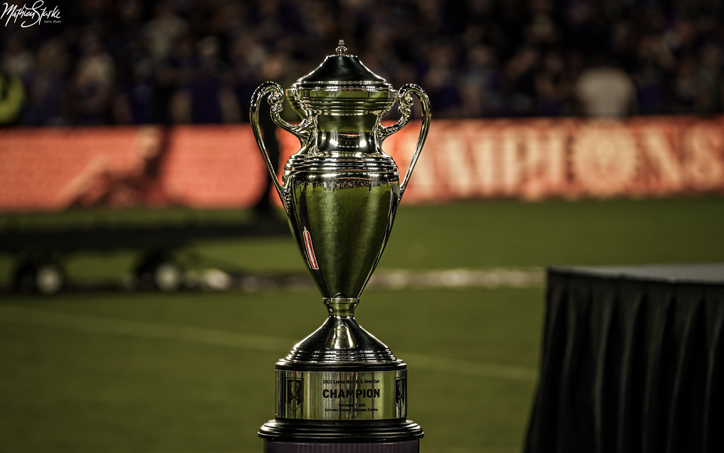
2022 US Open Cup Final trophy
Photo: Mathieu Starke

Click on the scores below for match reports
All Times Eastern / All future dates subject to change

Twitter (#USOC2024) | Facebook | Instagram | Flickr | Reddit

League Abbreviation Key
Colorado Premier League
(CPL)
Liga Deportiva Morazan
(LDM)
Major League Soccer
(MLS)
Maryland Super Soccer League
(MSSL)
Midwest Premier League
(MWPL)
MLS NEXT Pro
(MLSNP)
National Independent Soccer Association
(NISA)
National Premier Soccer League
(NPSL)
United Premier Soccer League
(UPSL)
United Soccer League of Pennsylvania
(USLPA)
United States Soccer League
(USSL)
USL Championship
(USL-C)
USL League One
(USL-1)
USL League Two
(USL-2)
 

ROUND 1AWAY TEAMSCOREHOME TEAMVENUE
March 19Miami United FC (USSL)1:0Chattanooga FC (MLSNP)Finley Stadium – Chattanooga, TN
March 19Savannah Clovers FC (NISA)2:0Brave SC (USL-2)H.G. Morse Stadium – Middleton, FL
March 19Duluth FC (NPSL)0:2Forward Madison FC (USL-1)Breese Stevens Field – Madison, WI
March 19Lexington Sporting Club (USL-1)3:4Vermont Green FC (USL-2)Virtue Field – Burlington, VT
March 19Maryland Bobcats FC (NISA) 2:0West Chester United SC (NPSL)YSC Sports – Wayne, PA
March 19FC America CFL Spurs (USSL)0:1South Georgia Tormenta FC (USL-1)Tormenta Stadium – Statesboro, GA
March 19Northern Colorado Hailstorm FC (USL-1)4:1Tulsa Athletic (NPSL)Athletic Field at Hicks Park – Tulsa, OK
March 19FORO SC (UPSL)2:2 (4:3 PK)Austin FC II (MLSNP)Parmer Field – Austin, TX
March 19El Farolito (NPSL)2:1Timbers2 (MLSNP)Providence Park – Portland, OR
March 20Christos FC (MSSL)0:1Richmond Kickers (USL-1)City Stadium – Richmond, VA
March 20Club de Lyon FC (NISA)3:2AS Frenzi (UPSL)Daytona State College Soccer Stadium – Daytona Beach, FL
March 20Greenville Triumph SC (USL-1)1:0South Carolina United FC (USL-2)SCUFC Southeastern Freight Lines Soccer Complex – Columbia, SC
March 20One Knoxville SC (USL-1)2:0Asheville City SC (USL-2)Greenwood Field (UNC Asheville) – Asheville, NC
March 20Georgia Lions SC (NISA)L:W (Forfeit)Apotheos FC (NPSL)Silverbacks Park Stadium – Atlanta, GA
March 20Hudson Valley Hammers (USL-2) ">1:5New York Red Bulls II (MLSNP)Pittser Field (Montclair State Univ.) – Montclair, NJ
March 20Chicago City SC (USL-2)0:6Chicago Fire FC II (MLSNP)SeatGeek Stadium – Bridgeview, IL
March 20MNUFC2 (MLSNP)3:0Chicago House AC (Midwest PL)Langhorst Field (Elmhurst Univ.) – Elmhurst, IL
March 20Central Valley Fuego FC (USL-1)2:1FC Folsom (UPSL)Folsom Lake College – Folsom, CA
March 20MesoAmerica FC (LD Morazan)0:1Irvine Zeta FC (NISA)Championship Soccer Stadium – Irvine, CA
March 20Redlands FC (USL-2)1:2LA Force (NISA)Long Beach Community College – Long Beach, CA
March 20Spokane Velocity FC (USL-1)1:0Ballard FC (USL-2)Memorial Stadium – Seattle, WA
March 20Des Moines Menace (USL-2)2:2 (5:4 PK)Capo FC (NISA)Jserra Catholic High School – San Juan Capistrano, CA
March 21Michigan Stars FC (NISA)1:0Steel City FC (NPSL)Ambrose Urbanic Field – Pittsburgh, PA
March 21NYCFC II (MLSNP)3:0FC Motown (NPSL)Pittser Field (Montclair State Univ.) – Montclair, NJ
March 21Brockton FC United (UPSL)2:4 (AET)Chattanooga Red Wolves SC (USL-1)CHI Memorial Stadium - East Ridge, TN
March 21South Carolina United Heat (UPSL)1:0Crown Legacy FC (MLSNP)Mecklenburg County Sportsplex – Matthews, NC
March 21Union Omaha (USL-1)4:0Western Mass Pioneers (USL-2)Lusitano Stadium – Ludlow, MA
March 21Charlotte Independence (USL-1)2:0Vereinigung Erzgebirge (USLPA)Cairn University – Langhorne, PA
March 21NoVa FC (USL-2)2:3Carolina Core FC (MLSNP)UNCG Soccer Complex – Greensboro, NC
March 21Arizona Monsoon FC (NISA)1:2 (AET)Lubbock Matadors (NPSL)LCU Soccer Field – Lubbock, TX
March 21Azteca FC (Colo PL)0:3Colorado Rapids 2 (MLSNP)Dick's Sporting Goods Park – Commerce City, CO
March 21Irvine Zeta FC II (UPSL)1:2Ventura County FC (MLSNP)Dignity Health Sports Park Track & Field Stadium – Carson, CA
ROUND 2AWAY TEAMSCOREHOME TEAMVENUE
April 2
Maryland Bobcats (NISA)
2:5Richmond Kickers (USL-1)
City Stadium – Richmond, VA
April 2South Carolina United Heat (UPSL)
0:0 (3:4 PK)Charlotte Independence (USL-1)
American Legion Memorial Stadium – Charlotte, NC
April 2New York Red Bulls II (MLSNP)
2:4NYCFC II (MLSNP)
Belson Stadium – Queens, NY
April 2FORO SC (UPSL)
0:2Lubbock Matadors (NPSL)
LCU Soccer Field – Lubbock, TX
April 2Michigan Stars FC (NISA)
2:0 (AET)MNUFC2 (MLSNP)
Allianz Field – St. Paul, MN
April 2El Farolito (NPSL)
2:1Central Valley Fuego FC (USL-1)
University of California Merced - Bobcat Field – Merced, CA
April 3Club de Lyon FC (NISA)
0:2Miami United FC (USSL)
UPSL Stadium – Pembroke Pines, FL
April 3Savannah Clovers FC (NISA)
0:4South Georgia Tormenta FC (USL-1)
Tormenta Stadium - Statesboro, GA
April 3Greenville Triumph SC (USL-1)
3:2 (AET)One Knoxville SC (USL-1)
Regal Stadium – Knoxville, TN
April 3Carolina Core FC (MLSNP)
2:1Vermont Green FC (USL-2)
Virtue Field – Burlington, VT
April 3Chattanooga Red Wolves SC (USL-1)
1:0Apotheos FC (NPSL)
Silverbacks Park Stadium – Atlanta, GA
April 3Forward Madison FC (USL-1)
0:2Chicago Fire II (MLSNP)
SeatGeek Stadium – Bridgeview IL
April 3Des Moines Menace (USL-2)
1:3Union Omaha (USL-1)
AL F. Caniglia Field – Omaha, NE
April 3Northern Colorado Hailstorm FC (USL-1)
3:2 (AET)Colorado Rapids 2 (MLSNP)
Dick's Sporting Goods Park – Commerce City, CO
April 3Irvine Zeta FC (NISA)
3:0Ventura County FC (MLSNP)
Dignity Health Sports Park Track & Field Stadium – Carson, CA
April 3LA Force (NISA)
0:1Spokane Velocity FC (USL-1)
ONE Spokane Stadium – Spokane, WA
ROUND 3AWAY TEAMSCOREHOME TEAMVENUE
April 16Rhode Island FC (USL-C)4:4 (4:5 PKCharlotte Independence (USL-1)American Legion Memorial Stadium – Charlotte, NC
April 16Greenville Triumph SC (USL-1)1:3Louisville City FC (USL-C)Lynn Family Stadium – Louisville, KY
April 16Michigan Stars FC (NISA)0:1Detroit City FC (USL-C)Keyworth Stadium – Hamtramck, MI
April 16Lubbock Matadors (NPSL)1:3New Mexico United (USL-C)Rio Rancho High School – Rio Rancho, NM
April 16El Farolito (NPSL)1:2 (AET)Oakland Roots SC (USL-C)CSUEB Pioneer Stadium – Hayward, CA
April 17Loudoun United FC (USL-C)0:0 (5:4 PK)Richmond Kickers (USL-1)City Stadium – Richmond, VA
April 17NYCFC II (MLSNP)3:2 (AET)Hartford Athletic (USL-C)Trinity Health Stadium – Hartford, CT
April 17Carolina Core FC (MLSNP)0:1North Carolina FC (USL-C)WakeMed Soccer Park – Cary, NC
April 17Miami United FC (USSL)0:2Memphis 901 FC (USL-C)AutoZone Park – Memphis, TN
April 17South Georgia Tormenta FC (USL-1)4:2Miami FC (USL-C)FIU Soccer Stadium – Miami, FL
April 17Chattanooga Red Wolves SC (USL-1)2:4 (AET)Birmingham Legion FC (USL-C)Varsity Soccer Field (Univ. of Montevallo) – Montevallo, AL
April 17El Paso Locomotive FC (USL-C)0:0 (3:5 PK)Union Omaha (USL-1)Werner Park – Papillion, NE
April 17Indy Eleven (USL-C)1:0Chicago Fire FC II (MLSNP)SeatGeek Stadium – Bridgeview, IL
April 17Northern Colorado Hailstorm FC (USL-1)1:2FC Tulsa (USL-C)University of Tulsa Soccer and Track Stadium – Tulsa, OK
April 17Irvine Zeta FC (NISA)1:2Monterey Bay F.C. (USL-C)Cardinale Stadium – Seaside, CA
April 17Spokane Velocity FC (USL-1)1:2 (AET)Las Vegas Lights FC (USL-C)Cashman Field – Las Vegas, NV
ROUND OF 32AWAY TEAMSCOREHOME TEAMVENUE
May 7FC Tulsa (USL-C)1:0Pittsburgh Riverhounds SC (USL-C)Highmark Stadium – Pittsburgh, PA
May 7Charlotte Independence (USL-1)0:3Atlanta United FC (MLS)Fifth Third Bank Stadium – Kennesaw, GA
May 7Detroit City FC (USL-C)3:3 (10:9 PK)Houston Dynamo FC (MLS)Shell Energy Stadium – Houston, TX
May 7Memphis 901 FC (USL-C)0:1FC Dallas (MLS)Toyota Stadium – Frisco, TX
May 7Oakland Roots SC (USL-C)0:1San Jose Earthquakes (MLS)PayPal Park – San Jose, CA
May 7Loudoun United FC (USL-C)2:1Orange County SC (USL-C)Championship Soccer Stadium – Irvine, CA
May 7Monterey Bay F.C. (USL-C)0:2Sacramento Republic FC (USL-C)Heart Health Park – Sacramento, CA
May 8South Georgia Tormenta FC (USL-1)2:3 (AET)Charleston Battery (USL-C)Patriots Point Soccer Stadium – Mount Pleasant, SC
May 8San Antonio FC (USL-C)0:2Indy Eleven (USL-C)The Bud and Jackie Sellick Bowl – Indianapolis, IN
May 8Phoenix Rising FC (USL-C)2:1 (AET)North Carolina FC (USL-C)WakeMed Soccer Park – Cary, NC
May 8Birmingham Legion FC (USL-C)4:6 (AET)Tampa Bay Rowdies (USL-C)Al Lang Stadium – St. Petersburg, FL
May 8Colorado Springs Switchbacks FC (USL-C)0:1NYCFC II (MLSNP)Belson Stadium – Queens, NY
May 8Sporting Kansas City (MLS)2:1 (AET)Union Omaha (USL-1)Al F. Caniglia Field – Omaha, NE
May 8Real Salt Lake (MLS)2:4New Mexico United (USL-C)Isotopes Park – Albuquerque, NM
May 8Los Angeles FC (MLS)3:1Las Vegas Lights FC (USL-C)Cashman Field – Las Vegas, NV
May 8Louisville City FC (USL-C)2:2 (4:5 PK)Seattle Sounders FC (MLS)Starfire Sports Complex – Tukwila, WA
ROUND OF 16AWAY TEAMSCOREHOME TEAMVENUE
May 21Atlanta United FC (MLS)0:0 (5:4 PK)Charleston Battery (USL-C)Patriot's Point Soccer Stadium – Mount Pleasant, SC
May 21New Mexico United (USL-C)3:0NYCFC II (MLSNP)Belson Stadium – Queens, NY
May 21FC Tulsa (USL-C)0:4Sporting KC (MLS)Children's Mercy Park – Kansas City, KS
May 21San Jose Earthquakes (MLS)3:4 (AET)Sacramento Republic FC (USL-C)Heart Health Park – Sacramento, CA
May 21Loudoun United FC (USL-C)0:3Los Angeles FC (MLS)BMO Stadium – Los Angeles, CA
May 22Detroit City FC (USL-C)0:3Indy Eleven (USL-C)Michael A. Carroll Stadium (IUPUI) – Indianapolis, IN
May 22FC Dallas (MLS)2:1Tampa Bay Rowdies (USL-C)Al Lang Stadium – St. Petersburg, FL
May 22Phoenix Rising FC (USL-C)1:2Seattle Sounders FC (MLS)Starfire Sports Complex – Tukwila, WA
QUARTERFINALSAWAY TEAMTIMEHOME TEAMVENUE
July 9Indy Eleven (USL-C)2:1Atlanta United FC (MLS)Fifth Third Bank Stadium – Kennesaw, GA
July 9Seattle Sounders FC (MLS)2:1Sacramento Republic FC (USL-C)Heart Health Park – Sacramento, CA
July 10FC Dallas (MLS)1:2 (AET)Sporting KC (MLS)Children's Mercy Park – Kansas City, KS
July 10New Mexico United (USL-C)1:3Los Angeles FC (MLS)BMO Stadium – Los Angeles, CA
SEMIFINALSAWAY TEAMTIMEHOME TEAMVENUE
Aug. 27Indy Eleven (USL-C)0:2Sporting KC (MLS)Children's Mercy Park – Kansas City, KS
Aug. 28Los Angeles FC (MLS)1:0Seattle Sounders FC (MLS)Starfire Sports Complex – Tukwila, WA
FINALAWAY TEAMTIMEHOME TEAMVENUE TBD
Sept. 25Sporting KC (MLS)1:3 (AET)Los Angeles FC (MLS)BMO Stadium – Los Angeles, CA

Filed Under: 2024 US Open Cup, Feature - Main, US Open Cup, US Open Cup Central Tagged With: 2024 US Open Cup

Commentary: US Soccer denies MLS’ attempt to ruin Lamar Hunt US Open Cup

January 2, 2024 by Jake Sillick

Photo: Houston Dynamo FC

After a Major League Soccer Board of Governors meeting on Wednesday, Dec. 13, the league announced on Friday evening, December 15,  that they were “planning” to be represented by their MLS NEXT Pro teams in the 2024 Lamar Hunt US Open Cup. MLS stated that they would then reevaluate their participation for future years at a later date.

Five days after MLS announced their decision, U.S. Soccer stated “after thoughtful consideration,” that MLS’ request for a waiver to use MLS NEXT Pro teams would be denied. This decision came at the “recommendation of U.S. Soccer staff and adopted by the Pro League Task Force.”

Both organizations have stated they will continue to work together to enhance and improve the Lamar Hunt US Open Cup.

Needless to say, this news came as a shock to the staff at TheCup.us, a media outlet that has been covering the US Open Cup extensively for the last 20 years. Most would argue that removing MLS teams from the competition  would have done significant damage to the Open Cup, which is open to all professional and amateur teams under the US Soccer umbrella. The tournament, which has been the United States’ only true national championship since it was launched in 1913, would have denied all lower division professional and amateur teams from competing on the field with the country’s top division. Imagine if Premier League teams like Arsenal or Liverpool pulled out of the FA Cup.

Aside from those MLS fans not being able to see their team compete, it would also deny lower division clubs the opportunity to face off against MLS teams. This format is unique in American sports. What would an event whose primary draw is the David vs. Goliath matchup be without Goliath?

On top of that, taking away the teams that draw the most fans and replacing them with reserve teams that rarely draw more than a couple thousand fans per game, at most, would have been a blow to the tournament’s bottom line and the relevance of the tournament. (MLS NEXT Pro does not publish attendance figures)

Since MLS first entered the tournament in 1996, it has been no secret that there are teams in the league that value the US Open Cup more than others. There are teams, who would likely not compete in the tournament. However, this tournament has always featured starting XI lineups as teams get through playing lower division teams and into the latter stages of the tournament. Teams are not playing a mostly reserve based roster from even the Quarterfinals.

The number of starting XI players playing for a MLS team vs. a USL team is no different than a Manchester United or Chelsea playing against a team from EFL Championship or League One. This happens worldwide and it’s done because managers feel that they can risk a less-than-top starting XI and still win the match, which would result in a reward of getting those same starting players a needed break.

This risk and reward equation is done consistently across all countries and their cup competitions on a yearly basis. It can result in upsets (or “cupsets”) which create great storylines, of course, but are devastating for the fans of the MLS team that is upset. When MLS managers get this equation wrong, they are accused of not taking the cup seriously, when it’s just a misjudgment of their team’s depth and/or a USL team’s quality. That is not the same thing and it’s unfair to call any team that doesn’t play a less than starting XI lineup against a USL team as not taking the cup seriously. The way to eliminate being upset for an MLS team is to have quality beyond the starting XI in a roster, not by demanding a starting XI against “inferior” competition. Playing in multiple competitions simultaneously is a part of this sport and teams manage it worldwide.

The Timeline of Events

Based on our sources within US Soccer, MLS and the federation began discussions in August of 2023 on how to improve the US Open Cup in a way that would make both organizations satisfied. While no details of these discussions have been made public, it’s clear now that MLS first team’s participation was part of the discussion points.

Within a month or two of that, longtime Open Cup committee member and MLS Executive VP Todd Durbin resigned from the committee. That departure left the committee without MLS representation, something that remains as of the publication of this article. The Open Cup committee generally implements the US Open Cup policy as approved by the US Soccer Board of Directors and then ratified by the general membership body (called the National Council). They also direct US Soccer staff on how to operate the tournament. This includes deciding what dates the tournament is played on and lots of other particulars of the tournament. (Here is an archive of the same page linked above from June 2023 with Todd Durbin listed)

UPDATE: US Soccer has confirmed to us that Todd Durbin was replaced by recently hired MLS EVP of Sporting Product & Competition Nelson Rodriguez and confirmed at the September board meeting, the website just hadn’t been updated yet.

At the end of the qualifying rounds for the 2024 US Open Cup just prior to Thanksgiving, US Soccer also announced the schedule for the 2024 tournament proper. This remained largely unchanged in terms of the number of rounds and the dates of the competition.

2024 LAMAR HUNT US OPEN CUP SCHEDULE
First Round: Tuesday, March 19 – Thursday, March 21
Second Round: Tuesday, April 2 – Wednesday, April 3
Third Round: Tuesday, April 16 – Wednesday, April 17
Round of 32: Tuesday, May 7 – Wednesday, May 8
Round of 16: Tuesday, May 21 – Wednesday, May 22
Quarterfinal: Tuesday, July 9 – Wednesday, July 10
Semifinal: Tuesday, Aug. 27 – Wednesday, Aug. 28
Final: Wednesday, Sept. 25

Based on US Open Cup policy, the deadline for entering next year’s Open Cup for professional teams is at the end of each calendar year (Dec. 31) although our sources indicate that US Soccer was pushing the pro leagues to have their paperwork in sooner so the tournament staff could begin scheduling and conducting draws for the competition at least two months prior to its start in March 2024. The deadline for all teams to get their paperwork in for the 2023 US Open Cup was on Dec. 20, 2022.

Reasons for MLS to make this decision

Fixture congestion

MLS has routinely stated that there is too much fixture congestion on the schedule. The US Open Cup takes up 6 potential scheduling windows during the season.

However, since the US Open Cup is a single elimination tournament, MLS regularly schedules makeup dates on US Open Cup dates as teams are eliminated and those midweeks become available.

With 26 MLS teams in the tournament, by the Round of 16 a minimum of 10 will be eliminated, and only playing 1-2 US Open Cup games. This does not include any upsets. By the Quarterfinals, 18 teams will be guaranteed to be eliminated, playing only 2-3 US Open Cup matches.

Contrast that with the Leagues Cup where the entire league is scheduled at least two matches, with many essentially guaranteed at least a third game. The Leagues Cup also completely breaks the MLS schedule for the tournament, while US Open Cup is interspersed into the season, finishing before the MLS Cup playoffs begin.

MLS would also prefer to not schedule matches during major international tournaments in the summer. Each MLS team is scheduled for 5-6 matches during the 2024 Copa America played in the United States.

Getting time for younger players in meaningful matches

MLS’ goal of having a pipeline from academy to their first team includes getting meaningful minutes against similar competition in US Open Cup matches for their reserves and academy players. MLS feels that the US Open Cup is too restrictive in that regard and they would rather just enter their MLS NEXT Pro teams directly.

However, the US Open Cup policy and handbook contradict this notion.

These roster rules have been in place since 2017, and have only gone through one minor revision in the pandemic. In January 2021, the US Open Cup policy was amended and removed a provision limiting the number of international players on any gameday 18-man lineup (starters and substitutes combined) to a maximum of five. The removal of this rule thereby defaulted any international player rules to the rules of the professional league the team belonged to.

If there are any restrictions to roster sizes or loans or international players beyond these listed above, they are done only at the league level and are either decided by MLS themselves or through collective bargaining with the MLS Players Association.

In fact, MLS teams have already regularly used MLSNP players, with an extreme case that happened in the 2023 Round of 32 on May 10. Los Angles FC traveled to Monterey Bay FC (USL Championship) and in that game, 10 of the 11 starters in that game were players loaned from LAFC 2 of MLS NEXT Pro.

Money

Sources at MLS state that they are unhappy with the general economics of the tournament, namely three things: the prize money given out for the competition, the take of the hosting fees that come into US Soccer to support this, and the amount of the travel reimbursement given out to the visiting teams.

Prize Money

Prize money for the US Open Cup winner and runner-up are roughly equivalent to the prize money given out to the MLS Cup winners and runner-up. Both champions receive $300,000, the US Open Cup runner-up receives $100,000 and the MLS Cup runner-up receives $150,000.

Beyond the finalists though, the prize money differs a lot more, as MLS Cup playoffs awards a total of $1.1 million dollars while the US Open Cup only has a total of $475,000. Of that US Open Cup total prize pool, $75,000 is prize money specifically reserved for non-MLS teams.

It would be great to see the prize money increase overall for this tournament, but to believe that the prize money for the US Open Cup is somehow that much more paltry compared to the other major domestic cup competition in this country is just not based in the facts, and certainly not at the very top for the finalists. To say that the prize money is the reason “teams don’t take it seriously” is ridiculous on its face, because why should MLS teams take MLS Cup seriously by that argument?

Hosting Fees

US Soccer takes a flat hosting fee from every match of the tournament, ranging from $750 for a first round match to $325,000 for the Final. On top of that, US Soccer takes a percentage of event net revenue (event gross revenue minus sales tax) after an amount is met, similar to a standard deductible on your income taxes. This ranges from 15% of all sales above $100,000 for matches from the start to the Quarterfinals, 50% of all sales above $150,000 for the Semifinals, and 50% of all sales above $375,000 for the Final.

US Soccer has for many years treated semifinals and finals as similar as possible to a US Men’s National Team or US Women’s National Team game, where the entire operation is theirs, from the on-field MC, to the PA announcer, to the TV crews, to the advertising and scoreboard operations. For those games, the home team provides what they normally would for a national team game, such as security and other stadium staff.

This would be similar to a NCAA Tournament game held on a school’s field or court, where it is a “neutral” game that just happens to be hosted by one school.

Beyond those three final games of the tournament, very few other matches meet the standard deductible of $100,000 in ticket sales, meaning US Soccer mostly only takes the flat hosting fee the rest of the tournament. Even sold out matches early in the tournament do not meet this threshold. The exact amounts per game are not disclosed, however, nor is the entire total amount taken in each season. Only the total revenue and expenses for the Open Cup in a given Fiscal Year is released by US Soccer in their audited financial statements (see below)

In addition, referee pay is no longer the responsibility of the home team as of the 2023 US Open Cup and their pay is instead baked into the hosting fee. The referees are then paid directly by US Soccer. Referee pay for US Open Cup games is collectively bargained between PRO (the referee assignment organization owned jointly by US Soccer, the Canadian Soccer Association, and MLS) and the referee union, PSRA.

Travel Reimbursements

All teams that travel in the tournament proper of US Open Cup receive a travel stipend from US Soccer with a maximum limit of $15,000 per match, doubling to $30,000 for the Final. This stipend can be used for flights, ground transportation, hotels, and meals on a per diem basis. Teams must show all receipts from traveling to receive this money. From talking with team officials, this amount of money is generally sufficient if only ground coach transportation is required to travel for a match. Once flights are required, this amount stops being enough to cover everything.

This travel stipend is a major reason for the regionalization of matchups and draws for the tournament, as any travel overruns above the stipend are the responsibility of the team, and also if a match is hyper local, such as two teams from the same city, US Soccer will not have to provide the maximum amount of the stipend.

The Overall US Open Cup Budget
Fiscal Year Revenues Expenses Profit
4/1/2021-3/31/2022 $26,700 $168,720 -$142,020
4/1/2020-3/31/2021 $645,223 $25,602 $619,621
4/1/2019-3/31/2020 $1,496,683 $1,489,753 $6,930
4/1/2018-3/31/2019 $1,075,674 $1,192,013 -$116,339
4/1/2017-3/31/2018 $1,501,411 $1,138,863 $362,548
4/1/2016-3/31/2017 $999,962 $922,519 $77,443
4/1/2015-3/31/2016 $1,327,523 $1,072,601 $254,922
4/1/2014-3/31/2015 $1,080,298 $1,002,711 $77,587
4/1/2013-3/31/2014 $1,193,912 $959,038 $234,874
4/1/2012-3/31/2013 $1,120,596 $593,886 $526,710
4/1/2011-3/31/2012 $629,978 $377,678 $252,300
4/1/2010-3/31/2011 $442,772 $371,151 $71,621
4/1/2009-3/31/2010 $404,705 $429,963 -$25,258
4/1/2008-3/31/2009 $351,981 $423,748 -$71,767
4/1/2007-3/31/2008 $300,252 $408,892 -$108,640
4/1/2006-3/31/2007 $236,402 $439,801 -$203,399
4/1/2005-3/31/2006 $188,004 $402,911 -$214,907
4/1/2004-3/31/2005 $182,202 $414,143 -$231,941
Total $13,204,278 $11,833,993 $1,370,285

To break this all down even further, listed above are the actual Revenue and Expenses for the Open Cup as reported in the federation’s yearly audited statements. Such revenues and expenses that would be a part of this would include:

Revenues:

  • Hosting fees
  • Entry fees
  • Forfeited performance bonds
  • Fines

Expenses:

  • Prize money
  • Travel stipends
  • Tournament operating costs
  • Referee pay (new, and not shown in this table, yet)

This does not include any revenue from sold marketing rights for the tournament, including any TV deals. That is a separate line item on US Soccer’s statements.

Prior to 2023 for the last 20 years, US Soccer sold all commercial rights to Soccer United Marketing (abbreviated SUM, a marketing company wholly owned by Major League Soccer) and this includes the US Open Cup. Since the Open Cup is mixed into the national team’s TV money, it is hard to quantify how much money the US Open Cup brought in, even from the 2019-2022 deal with ESPN+ that was specifically sold by SUM. If MLS has had an issue with how much money the Open Cup has brought in, their own marketing company could have used the 20 years they had the tournament as their client to bring it to better heights.

On the whole, it makes no sense for US Soccer coming from MLS that they want to decrease the revenues on this budget (hosting fees) while also increasing expenditures (travel reimbursements) for a tournament that runs on a mostly balanced budget for the operations of the tournament. US Soccer is under no obligation to run this tournament at a major loss. If MLS doesn’t want US Soccer taking in so much in hosting fees, a grand way to do to that is to not host the games in the first place. Nobody is making them host. Yet, they continue to do so, for obvious reasons, as hosting is a big advantage to winning vs. the lower divisions. If they have an issue with how much US Soccer takes for semifinals and finals, then US Soccer is also free to go back to neutral site finals, which would result in likely just a lump sum payment for the facility use, similar to a US National Team game, and all the ticket proceeds go US Soccer.

One more note regarding the financial aspect of the US Open Cup: The federation’s ability to increase the prize money and to improve travel reimbursements is centered around its ability to market the tournament, and therefore attract sponsors. More specifically a much talked about title sponsor. If US Soccer wants to make the tournament more financially lucrative for the teams involved, they need to attract sponsors. However, MLS’ attempt to remove their teams from the competition would appear to be counterproductive because MLS teams (which have the largest fan bases and are the Goliath in the “David vs. Goliath” matchups, which are the main draw of the competition) exiting the Open Cup would severely handicap the federation’s ability to sell the tournament to potential sponsors.  

Reasons US Soccer have to deny this waiver

Professional League Standards

US Soccer Professional League Standards is the document used to govern the sanctioning of all professional soccer in this country. FIFA grants US Soccer exclusive authority over the professional and amateur game in the United States, although Congress only grants that authority specifically over the amateur game and selecting national teams per the Ted Stevens Amateur Sports Act as written in 1978 and modified in 1998.

While that authority over the professional game is being challenged in court by NASL in an antitrust lawsuit, US Soccer still maintains that control as of now and does so in part through this document. The PLS document is authored and modified by the Professional League Standards Task Force, which is then sent to the professional leagues for review and feedback before being submitted for approval by the Board of Directors at US Soccer.

The most recent revision of this document was ratified by the board March 17, 2023 and can be found here. As stated in the first section for Division I Men’s Outdoor Soccer, of which MLS is the only league sanctioned as such, all teams are required to participate in US Soccer and CONCACAF competitions for which they are eligible for.

US Open Cup team eligibility rules

US Soccer also requires the same thing of Division III leagues as well, of which MLS NEXT Pro is one of three leagues sanctioned at this level. However, Open Cup policy specifically makes any professional team who is owned by a higher division professional team ineligible. As the rule currently is, the teams that fall under this rule are the 25 MLS NEXT Pro teams that are owned by MLS teams. The remaining two teams, Chattanooga FC and Carolina Core FC, are independently owned and are still eligible for the U.S. Open Cup. D.C. United is the only United States based MLS team without a MLS NEXT Pro team, so if this plan would have been approved, D.C. United would have not had any representation in the tournament at all.

This rule was enacted before the 2016 U.S. Open Cup as the second, lower division teams owned by MLS was growing from 5 to 9 in USL Championship (named USL Pro at the time).

The Open Cup committee has a policy that two teams with either an affiliation or shared ownership in the competition must be separated at all times in the competition, until it is impossible to separate them in the Final. This is easily accomplished with a few of these pairs of teams in the competition, but would become increasingly difficult as the number of pairs increase, while still maintaining regionalization of the pairings and limiting travel costs.

In fact, a different restriction is the reason the Second Round of the 2022 and 2023 US Open Cup has had a cross country match each time. The early rounds of the tournament are supposed to be as local as possible, but the additional restriction implemented by the committee is that teams from the same entry pool may not face each other immediately in the round that they enter the tournament. Because of this, Division II teams could not face Division II teams and Division III teams could not face Division III teams in the Second Round of those two tournaments. Because of the lack of enough Division III teams in the Western US and the lack of enough Division II teams in the southeastern United States, the leftover Division II teams in the west and the leftover Division III team in the Southeast would face off.

There were five matches where the two teams were 1000 miles or more apart in the Second Round. This included a 2200 mile road trip between Oakland Roots of USL Championship traveling to Greenville Triumph of USL League One. These matches were ONLY the result of the restriction placed by the committee that prevented teams from the same division level from facing off in the Second Round.

It can be shown, therefore, that travel lengths and costs go up as more restrictions are placed on who can face off in the U.S. Open Cup in a given round.

To compensate for these teams for being ineligible, the following year in 2017 the rule was added to allow unlimited loans from ineligible teams to their parent organization. This enabled these players to be cup tied to the main MLS team and not the reserve team.

As far as we can tell, no major soccer playing country currently allows reserve teams in their cups. Spain, Germany, and the Netherlands all used to and have famous stories about those second teams, but they have since been restricted from playing in the Copa del Rey, DFB Pokal, and KNVB Cup, respectively. The largest European country we can find that still allows them is Poland in the Polish Cup.

Commercial value

Name of the competition

The US Open Cup policy used to state that the “competition shall be known as the Lamar Hunt U.S. Open Cup”, but was recently changed during the pandemic by the Board of Directors of US Soccer to state “The competition name shall be determined by the Federation’s Board of Directors and has been known since 1999 as the “Lamar Hunt U.S. Open Cup”. This may seem like a subtle wording change, but it opens up the avenue for the U.S. Open Cup to have a title sponsor of the competition (similar to the The FA Cup being titled as the Emirates FA Cup). While we cannot say how close the federation is to obtaining a title sponsor, but TheCup.us has confirmed that this is something that US Soccer has been working on since this change was made during the pandemic.

As mentioned earlier, US Soccer may feel that the commercial value of the title sponsor would be negatively impacted without MLS’ first teams in the tournament.

TV value

Prior to 2019, the U.S. Open Cup had no TV contract except for the Final, which bounced around from Fox Soccer Channel and its properties, to ESPN and its properties, to even Gol TV. Starting in 2019, the entire competition was played on ESPN+ from the First Round to the Final. US Soccer would partner with, and pay a production company, VISTA Worldlink to produce all of the games in 2019. However, our sources confirmed that all production costs for that year were paid by US Soccer through their own budget, and not by ESPN. The deal was initially for four years, but the pandemic canceled two of those years. In 2022, not all matches were shown on ESPN+ in the first round, but US Soccer covered the remaining matches on their YouTube channel at their cost.

After the federation’s deal in 2023 with Warner Bros. Discovery, Bleacher Report’s YouTube channel would show select matches, with CBS obtaining a sublicense to show even more matches throughout the tournament, including both Semifinals and the Final. Again, just like with ESPN+, the broadcast costs were done at US Soccer’s expense, but now they had multiple broadcasters to show the matches. Once Lionel Messi started playing for Inter Miami CF and would be playing in the Semifinal match at FC Cincinnati, US Soccer was also able to secure a Spanish language broadcast on NBC Universal’s Telemundo.

Between all of these extra deals, including the money gained from having Lionel Messi in just one match, as he was injured for the Final, our sources state that the money that came in from that allowed them to, for the first time, provide much more in travel stipends for the qualifying rounds this past fall. In prior years, US Soccer would NOT pay for any travel in qualifying matches, with the lone exception being if a flight was required, of which US Soccer would cover $200 per person on the traveling party for the flights.

Without MLS teams in the tournament, US Soccer may not be able to get as much money from any TV deal they would negotiate for the tournament.

What happens now

From here, US Soccer and MLS have continued their discussions and negotiations, but any discussions would include MLS’ full participation with their first teams in the tournament, per sources close to the situation. We expect in January to early February for the final list of participating teams to be announced and the first two rounds to be drawn and the schedule fully released.

Based on the composition currently of the professional leagues and statements already announced: We expect Division III teams to enter in the First Round scheduled for March 19-21, while Division II teams will remain entering in the Second Round (April 2-3). This also adds up with the 32 amateur Open Division teams already announced entering in the First Round.

Also, because only 32 Open Division teams were announced and not more, we are also expecting more MLS teams to be seeded into the Round of 32 than in 2022 and 2023. In those two years, 8 MLS teams were seeded, while for 2024, as many as half the league (13) could be seeded into that round, with the other half entering in the Third Round. US Soccer has already announced that at least the 9 US-based CONCACAF Champions Cup teams will enter in the Round of 32.

Whatever happens this month, US Soccer does have an interest in making the U.S. Open Cup as big as it can be, especially now with all marketing done in house. Changes don’t happen overnight, but this tournament is trending in the right direction in a lot of areas and is increasing to a new record size every year. MLS’ complaints are easily refuted by facts in some places, but if they truly want their younger players to get more minutes, they can change their own rules to accommodate. But taking the teams out completely kills any chance of the competition being what they are asking for, let alone what US Soccer wants it to be.

Filed Under: 2024 US Open Cup, Feature - Main, Featured Post - Main, US Open Cup, US Open Cup Central Tagged With: 2024 US Open Cup, Major League Soccer

2024 US Open Cup Qualifying Final Round: FC America CFL Spurs beat 3rd UPSL team to qualify for first time

November 23, 2023 by Josh Hakala

Photo: FC America CFL Spurs

FULL MATCH VIDEO (YouTube)

FC America CFL Spurs of the United States Soccer League (formerly known as the National Soccer League) knocked off a third straight UPSL club to qualify for the Lamar Hunt US Open Cup for the first time. On Sunday night, they defeated one of the top teams in the league, Leg-AZ World FC, 4-1 to clinch a spot in the 109th edition of the tournament.

The Orlando area-based club originally registered as “CFL GOSA Spurs” but later changed their team name to “FC America CFL Spurs” prior to their opening game. They reached the “Win & You’re In” round after back-to-back clean sheet victories. The Spurs crushed their opening round opponents, with an 8-0 win over Florida-Central Division bottom-feeders Deportivo Lake Mary. Then a narrow 1-0 win over Harbor City, a team in third place in the same division. Leg-AZ World FC (Leg-AZ stands for Life Education Growth – Association of Friends) entered Saturday’s game in first place with a 7-1-1 league record.

“We are very proud to have qualified for the US Open Cup on our first try,” said FC America head coach Akeem Flemmings. “We are looking forward to working hard to keep it going.”

FC America hosted the game at Lake Mary High School in Lake Mary, Fla., just outside of Orlando. The home team wasted no time opening the scoring. Thirty seconds into the game, pressure by FCA created a turnover on the right wing. Then the ball was played on the ground to William Eyang at the top of the box. With two defenders on him, he received the ball and make a quick move to split the defenders and beat the keeper with a low driving shot.

In the 37th minute, Leg-AZ was putting pressure on the FCA goal and earned a throw-in deep in the home team’s defensive third. The throw came in to the penalty area and was headed clear and fell to an FCA player. He immediately played the ball up the field to the feet of Eyang who did a kick-and-run past the last defender near midfield and found himself one-on-one with the goalkeeper from 60 yards away. He dribbled all the way to the penalty area and beat the helpless netminder to make it 2-0.

Eyang, a former pro who was the UPSL’s golden boot winner in the 2021 Spring Season when he played for the Florida Tropics, has scored four goals in this year’s qualifying tournament for FC America.

Two minutes later, Leg-AZ struck back with a cross from the right wing that found an unmarked Phanor Shelby right in front of goal, who headed it past the goalkeeper to cut the lead in half.

In the 66th minute, the Spurs would extend their lead when Jayson Udom received a pass on the right side of the penalty area and fired a low shot to the far post, just out of the reach of the goalkeeper.

The match would remain 3-1 until stoppage time when a shot was blocked in the penalty area by a defender and the ball lofted into the air. Melvrik Fernandes was at the right place at the right time as he brought the ball down and beat the keeper. It was the second goal in as many games as Fernandes scored the lone goal in the win over Harbor City in Round 3.

Filed Under: 2024 US Open Cup, Feature - Main, Feature - Qualifying, US Open Cup, US Open Cup Central, US Open Cup Qualifying Tagged With: 2024 US Open Cup, 2024 US Open Cup Qualifying, FC America CFL Spurs, Leg-AZ World FC

2024 US Open Cup Qualifying Final Round: Miami United, “El Equipo Del Pueblo”, back in USOC after win

November 22, 2023 by James Knowles

Photo: Miami United FC

In the stands in Hialeah, Florida on Sunday, a banner read “EL EQUIPO DEL PUEBLO” (The People’s Team).

No doubt the host Miami United FC faithful enjoyed the performance from their team as fans, family, and friends will now get to watch Miami play in the Lamar Hunt US Open Cup Proper — and they’ll likely be hoping for another inspired performance from their main man, Robertino Insua. He netted a brace for the home side in a 3-1 win over visiting City Soccer FC.

It was Miami’s 10th straight qualifying win dating back to 2020. United qualified in 2020 (3 wins) but the US Open Cup was ultimately canceled due to the COVID-19 pandemic. After not entering in 2022 (the club’s NPSL side qualified instead), Miami returned for the 2023 competition and won four games to qualify. Adding the three wins from this year, that gives them 10 straight wins, which is the longest winning streak of the competition’s short history, which began in 2015. Combined with Miami United’s NPSL club, the 2024 US Open Cup will mark the sixth time the club will participate in the United States’ national championship (7th time that they qualified, if you include 2020). It is also the team’s fourth straight qualification to the tournament.

“This is certainly will be the most important Open Cup run given how football has grown, especially in South Florida,” said Miami United CEO Roberto Sacca. “We couldn’t miss the 2024 edition of the US Open Cup as we will try to do our best as the underdog and our dream is to get to play against Lionel Messi’s Inter Miami CF.”

CLINCHED !!! ???????????? https://t.co/6czqG9mGTE

— MIAMI UNITED F.C. (@miamiunitedfc) November 20, 2023

The match between the two United States Soccer League (USSL) rivals started out with Miami controlling much of the possession. Although that didn’t lead to many chances right off the bat, a shot from just past the center circle highlighted the first 10 minutes. Miami United did not maintain its stranglehold on possession for the rest of the first half but they would be the ones to break the deadlock.

In the 26th minute, a mistake at the back led to City Soccer conceding first. A failed clearance led to a deflection which put United’s Insua in on goal. He tucked it past the opposing goalkeeper, close to the near post.

In the 39th minute, Miami United had another good chance to score when a pass found an open man at the edge of the City box. The visitors’ goalkeeper managed to get a strong hand on it and pushed that shot wide. A third good attempt was saved by a defender helping his keeper out when United got a free shot in the 42nd. The tide of the first half was certainly flowing one way.

The second half started with controversy as City Soccer’s Juan Basco received his marching orders following an accumulation of yellow cards. Despite going down a man, City Soccer showed they would not go quietly. Beside two good chances off of corner kicks in the 68th and 72nd minutes, they held firm. Unfortunately, those would prove to be the most dangerous opportunities. Miami United found another breakthrough in the 73rd minute through Josduard Serrano following the set piece to give themselves a 2-0 cushion.

#USOC2024 | @opencup

@miamiunitedfc ⬇️ v. @citysoccer_fc ⬇️ pic.twitter.com/kRHx4fsFdZ

— U.S. Open Cup (@opencup) November 19, 2023

Miami took another step toward putting the game to bed in the 77th minute off yet another set piece. This time, directly from a free kick, Insua stepped up to put an exclamation point on the game. City Soccer’s shot stopper and his wall stood no chance in the face of Insua’s precision.

“Robertino is our Lionel Messi, our “DIEZ”, the undisputed leader of a fantastic group,” said Sacca. “Robertino comes from a family with a football DNA, his brother also plays in the Argentine Serie A and his dad Ruben Dario Insua is the current coach of San Lorenzo.”

According to Sacca, Insua grew up in the San Lorenzo de Almagro and subsequently made his debut in professional football in Ecuador with Liga de Portoviejo and Guayaquil City before arriving in the States with Miami United where he scored 67 goals (16 in the US Open Cup play and 51 goals since Nov. of 2021.). During this competition Insua has scored nine goals in three matches.

City showed a “Never Say Die” attitude throughout the whole game. In the 90th minute it was Miami United’s turn to attempt a clearance which would land in their own net as the ball from a Miami defender smacked into a City Soccer player’s chest and went into the net. The lone goal would be all the visitors had to show for their efforts, however.

“I feel that a great group is being created thanks to the work of the new coach Mr. Claudio Frean,” said Sacca. “Our goal is to try to repeat our magic run from the 2018 US Open Cup where we reached the 4th round and faced Orlando City SC.”

FULL MATCH

Filed Under: 2024 US Open Cup, Feature - Main, Feature - Qualifying, US Open Cup, US Open Cup Central, US Open Cup Qualifying Tagged With: 2024 US Open Cup, 2024 US Open Cup Qualifying, City Soccer FC, Miami United FC

2024 US Open Cup Qualifying Final Round: FC Folsom takes advantage of early Inter SF red card, wins 4-2

November 22, 2023 by Nicholas Ryan

Photo: FC Folsom

An early red card in Sunday’s match to advance to the Lamar Hunt US Open Cup was seemingly too much for visiting Inter San Francisco as host Folsom FC advanced with a 4-2 win, securing the club’s first chance at US Open Cup glory.

Folsom FC had never been in the Cup before while Inter San Francisco made it last year. Both teams had very different styles of play, with Inter San Francisco playing very physically with a team of very large players. Folsom FC on the other hand relied on speed and an aggressive offense, which ultimately worked out well.

Folsom FC captain Luis Aguilar said the team is excited for their debut in the Cup next spring.

“We’re very excited and very anxious to see what’s next,” he said. “It’s a learning experience for all of us. But I think we’re a senior team. We’re all (in our) mid-twenties, that’s probably our average age, so I think we’ve all played at high levels. I think we know what it takes.”

The game got off to a rough start for Inter San Francisco, with a red card given in the 10th minute to Sebastian Alvarez for spitting. Down a man, the odds of coming out ahead in the match were diminished. Despite the man advantage, the match remained scoreless for the first half, with the ball mainly being controlled by Folsom.

Aguilar said their play was “hectic” for the start of the game, but after Inter San Francisco’s red card, Folsom started playing as a team and their game came together. Controlling the ball for most of the game, they seemed to be playing calm, contrary to Inter San Francisco, who played a very physical game.

Aguilar says that once they adjusted to the physicality, they “really picked it up on the physical aspect, mental aspect and the technical aspect as well.”

The second half started fast with a goal from Inter San Francisco’s Javier Rivera in the 46th minute but Folsom responded quickly to tie the game through Kody Duff.

Ten minutes later, Folsom’s Moshi Wilondja scored in the 63rd minute, taking the first lead of the day. Just two minutes later Joe Restrani did the same, extending the lead and putting Folsom in control. The game was idle for a bit, until Folsom FC’s Gabe Padilla scored in the 75th minute, to extend its lead to three.

Inter responded with a goal from former pro Matt Fondy — also in the 75th — but it wasn’t enough and the game ended at 4-2.

The last moment of excitement came in the 88th minute with a scuffle taking place on the field, involving most of the players on the field. Although nothing major happened in the altercation, and no red cards were assessed, a player on both teams each received a yellow.

Filed Under: 2024 US Open Cup, Feature - Main, Feature - Qualifying, US Open Cup, US Open Cup Central, US Open Cup Qualifying Tagged With: 2024 US Open Cup, 2024 US Open Cup Qualifying, FC Folsom, International San Francisco

2024 US Open Cup Qualifying Final Round: Vereinigung Erzgebirge wins PK shootout, earns first USOC berth since 2002

November 22, 2023 by Dave Einhorn

Photo: Vereinigung Erzgebirge


Vereinigung Erzgebirge (VE) qualified for the 2024 U.S. Open Cup after their win over New Jersey Alliance on Sunday, 0-0 (4:2 on penalty kicks). It will be VE’s first time participating in the tournament in more than two decades (though it did qualify for the cancelled 2020 tournament). It was one of the stranger games in the 2024 Lamar Hunt US Open Cup qualifying rounds: an initial yellow card was changed to red, extra time was shortened, and two teams who usually have no trouble scoring held each other goalless. In the end, penalty kicks decided who moved on. VE edged out New Jersey Alliance after the Alliance missed two penalties. It will be the first time Vereinigung Erzgebirge has featured in the Open Cup since 2002.

This fixture was always going to be difficult for both teams. Vereinigung Erzgebirge is used to grinding out wins and battling an opponent all 90 minutes. New Jersey is a well-disciplined and tactical team that wants to play their way. Unsurprisingly, the game started with lots of shuffling for position and feeling out the opponent. The Alliance had the better opportunities, even without their star striker, Isimohi Bello, who had four goals in the last round against Philadelphia Ukrainian Americans. New Jersey Alliance could not capitalize on their opportunities, as they were caught by the offside flag on a few occasions and stopped by Vereinigung Erzgebirge goalkeeper Steve Paul.

The second half saw immediate substitutes from both teams as the action heated up. Bello would sub in for New Jersey with the hope of giving them the lead. While his appearance did offer more upfront for the Alliance, it was clear that VE was growing into the game. In particular, a shot from a corner missed everyone in the box but managed to hit the far post itself. A well-worked ball from the left side was set up perfectly but was quickly flashed over the bar. As the seconds ticked away, extra time looked necessary. Neither team could break the deadlock, and the crowd was treated to more soccer.

Evan Vare sends @VEClub back to the Open Cup!#USOC2024 pic.twitter.com/W0SIKoKjK1

— Philadelphia Soccer Now (@phlsoccernow) November 19, 2023

It was in extra time that every player and coach realized it was now do-or-die. Heads would go down after every miss, and teammates and coaches alike were vocal after the numerous fouls called. One, in particular, was a crunching tackle from Vereinigung Erzgebirge captain Kevin Smolyn. The sound of cleats clashing with pads so suddenly grasped everyone’s attention. The referee was in a good spot to make a call, a difficult one, and chose to show yellow. Moments later, he conferred with his assistants, and the card was changed to red. The Vereinigung Erzgebirge bench was furious with the decision as it appeared the change was made without formal evidence. The officiating crew stood by one another and were united in the decision being a red card. That brought Vereinigung Erzgebirge down to 10 men with the second half of extra time to play.

This brought us to the next twist in the tale. The United States Soccer Federation and the match commissioner shortened the second period of extra time to ten minutes due to the field’s lack of light. Although the match kicked off at 2 p.m., it was now close to 4:30. The sun was due to set at 4:41. This presented a slight advantage to Vereinigung Erzgebirge as they only needed to keep New Jersey Alliance at bay for 10 minutes before going to penalties.

90’ @VEClub almost finds one late. Still deadlocked.#USOC2024 pic.twitter.com/ZX8wdYA67w

— Philadelphia Soccer Now (@phlsoccernow) November 19, 2023

They would do exactly that. During the short break in play, both sets of players seemed exhausted. Penalty takers were selected, as was the goal and order for shooting. The final act of the U.S. Open Cup qualifier had a new player – the home crowd. More than 100 people wrapped in jackets and blankets were now outside cheering for Vereinigung Erzgebirge. New Jersey were able to convert their first penalty calmly, but the eruption after every VE spot kick was incredible. New Jersey would unfortunately miss two penalties, leaving the final score Vereinigung Erzgebirge 4 and New Jersey Alliance 2. Upon the final penalty, VE players celebrated their accomplishments on the field with friends, family, and the Under-15 side. A moment that showed the pride of their program since 2002.

After the match, New Jersey Alliance coach Matthew Farrell felt his team had a great overall effort but didn’t assert their style of play as the match went on.

“I think it’s just a little bit of a rush where you’re not getting the necessary breaks, and then you try and resort to a long ball style of play, which isn’t what we’re used to,” said Farrell.

His counterpart, coach Rob Oldfield of Vereinigung Erzgebirge, quickly highlighted how home-field advantage played a role in the victory.

“What a great crowd,” said Oldfield. “Amateur soccer should be like this.”

As for Oldfield, he was a member of the 2002 squad that last played in the US Open Cup for Vereinigung Erzgebirge. The history of the moment was not lost on him.

“I’ve been basically chasing this my whole life to get the team back in it.” Several people congratulated him, even after the sun had officially set.

Vereinigung Erzgebirge are the victors and seek to make their mark on the US Open Cup after it has eluded them for so long. The party in their clubhouse was historic, and, in a sign of good faith, New Jersey Alliance players were invited as honored guests. Truly, the magic of the Cup was alive and well.

Filed Under: 2024 US Open Cup, Feature - Main, Feature - Qualifying, US Open Cup, US Open Cup Central, US Open Cup Qualifying Tagged With: 2024 US Open Cup, 2024 US Open Cup Qualifying, New Jersey Alliance FC, Vereinigung Erzgebirge

2024 US Open Cup Qualifying Final Round: Brockton FC United uses lengthy stoppage time to get revenge on Pancyprian Freedoms

November 22, 2023 by Michael Battista

Photo: Brockton FC United

On a chilly night in Jamaica, Queens, the New York Pancyprian Freedoms and Brockton FC United looked destined for extra time. Both teams were held scoreless as the clock neared the 90-minute mark at St. John’s University’s Belson Stadium. However, over ten minutes of second-half stoppage time saw four goals and a red card. The final whistle saw Brockton book its ticket for the 2024 Lamar Hunt US Open Cup with a 3-1 win.

“It’s a huge accomplishment,” said forward Wuilito Fernandes. “We had our goal which was to win the (UPSL) regular season, which we did, and win the playoffs. Unfortunately, we slept on that one last weekend against (Olé Football Club). Our other goal was to go as far as we can into the US Open Cup and try to make sure we qualify.

“We did what we had to do to prepare after that tough loss to come here and get the good result. It’s a great feeling, it’s special, it’s priceless.”

This will be Brockton’s second-ever Open Cup appearance after first debuting in the 2022 tournament. The Massachusetts side has made it to a “Win & You’re In” match in four straight qualifying tournaments (2020, 2022, 2023, and 2024).

That first match in the fall of 2019 was against the Pancyprian Freedoms, who won 1-0 as the game ended early due to weather. Brockton head coach Jose Mendes said after Saturday’s match that he and many on the team had not forgotten that game.

“Just like it happened to us back in (2019) where they eliminated us to qualify for the tournament, that was our goal,” Mendes said through a translator. “To come here and actually make sure they feel the same thing that we felt back then.”

Brockton made sure their win was as painful for New York as possible in front of a crowd of 30 fans at Belson. In the 90th minute, they had a quick attack up the middle. Leandro Alves had his shot saved by Rafael Diaz, who was unable to catch the ball. As it rolled, Alves went for it, and Diaz, on the ground, extended his hands. According to the referee, Diaz grabbed the player’s legs and forced him to trip, earning a penalty shot.

Fernandes, a former USL professional who has caps with the Cape Verde national team, stepped up. His shot into the top left corner gave Brockton a 1-0 lead in the 90+1st minute.

The Freedoms kicked off just as the clock ticked over to 93 minutes. Within 120 seconds, the game was tied. A cross from the left side found Matthew Forester, who tapped it back in the box. A whiffed shot by a Pancyprian set the ball trickling towards Joe Holland, who slammed the ball into the net in the fourth minute of stoppage time.

Again, the game looked destined for extra time. But the referee allowed play to continue. A foul in the New York end gave Brockton a free kick, which they took quickly. Stephan Teixeira shot low towards the left post, which Diaz saved. Manuel Alejandro Pereira Castellon jumped on the loose ball and struck it into the right side to make it 2-1. He ran towards the Brockton bench and was swarmed by his teammates as Pancyprian players argued with the referee; Both about offside and that the free kick was taken too quickly.

With momentum back on their side, Brockton’s Euclides Ramos Mendonça iced the game with a shot from miles out. It chipped Diaz and found the back of the net in the 11th minute of stoppage time.

After it was all done Fernandes noted that the referee initially said there would be seven minutes of stoppage time after the initial go-ahead PK was scored. He said even that felt like slow motion, feeling closer to 15 minutes (which eventually, it got close to being).

“It felt so long,” the Cape Verde national said. “We’re just happy it ended and we’re just happy we’re the ones that came out on top. And now we’re excited to get back on the road and enjoy this victory.”

Of note, Brockton’s Jose Orlet Tavares had been cautioned in the 70th minute and subbed off later. He removed his coat and ran onto the field in uniform to celebrate, running across the pitch near the Belson bleachers. That earned him a second yellow, meaning he will miss Brockton’s first Open Cup match.

The first half went by fairly quickly but neither team found the back of the net. New York was forced to make an early sub within the first ten minutes after a head-to-head collision. A Brockton takeaway got the ball to Pereira Castellon. He sent a high ball into the box where St. John’s alumni Luke Hansen and Brockton’s Leonardo Teixeira slammed heads while trying to head the ball. Teixeira eventually got up but Hansen, who got up and walked shakily before sitting down again, was subbed off for Camil Koreichi.

Overall, New York had the better offense in the first 45 minutes. Former professional and Grenada national team player Shavon John-Brown skied a header over the crossbar in the 10th minute. For much of the first half John-Brown, who scored a brace last round, was playing near the midfield. It turns out Pancyprian, missing players due to injury and inability to adjust the roster during qualifying, was trying to adjust.

Holland, another former professional, returned to the starting XI and played up top. In the last 15 minutes, he shot into the side of the netting and got a weak shot off from the top of the box that the keeper jumped on. In stoppage time, Holland got under a free kick in the box but headed it wide right to keep it scoreless.

For the visitors, Brockton’s best assets were great set-piece defending and fast breaks. The side stopped at least three New York corner kicks and two free kicks near the penalty area.

A Brockton FC United player strikes the ball in the heavy rain in the club’s 2020 US Open Cup qualifier against the New York Pancyprian Freedoms. Photo: Liz McQuilkin – Mass Soccer

Joseano Paulo Tavares struck a hard shot right to keeper Rafael Diaz in the 12th minute. The team’s best chances of the first half came in the 39th minute. After a Holland shot was saved, United countered quickly up the right side. Running to near the end line, the ball was played to Leonardo Teixeira six yards from the net. His shot was saved by Diaz but put back into play. Pereira Castellon quickly jumped on the rebound attempt but that was blocked by a diving New York player.

“We knew it was going to be a tough game and we tried to stay as open as possible,” Mendes said. “Especially when we transition back and forth. Make sure we do it in an organized way.”

After the break Brockton’s offense began to pick up possession. In the first 20 minutes, United received two yellow cards and two free kicks on opposite sides of the Pancyprian box. Another in the 68th saw a Brockton player attempt a bicycle kick but not get fully connected with it.

New York wasn’t quiet either. John-Brown began to move up and Holland continued to threaten. A 65th-minute shot went right to Brockton keeper Christopher Moura. Ten minutes later, he ran down the left side and danced around a defender near the end line. But moving the ball towards the net, he either crossed or shot, allowing United to block it back into play.

Forester got a great scissor kick-off in the 88th minute. Moura made a jumping dive to his left, but the ball sailed wide of the goal.

For New York, it is another crushing disappointment. The three-time Open Cup champions have not competed in the tournament proper since 2016. Their last qualification in 2020 was snubbed when COVID-19 canceled the tournament for the first time ever.

Filed Under: 2024 US Open Cup, Feature - Main, Feature - Qualifying, US Open Cup, US Open Cup Central, US Open Cup Qualifying Tagged With: 2024 US Open Cup, 2024 US Open Cup Qualifying, Brockton FC United, new york pancyprian freedoms

2024 US Open Cup Qualifying Final Round: South Carolina United puts past behind them, qualify with rivalry win

November 21, 2023 by Ronan Briscoe

Photo: South Carolina United Heat

After so much trial and error in the Lamar Hunt US Open Cup qualifying tournament over the past three seasons, the South Carolina United Heat finally broke through. The Heat became the first Open Division Local club to qualify for the tournament proper out of the state of South Carolina with a 4-2 win this weekend over fellow UPSL side, Tennessee Tempo FC.

Led by two late goals from Alejo Binaghi, the pain and heartbreak of the past is now nothing but a memory, as SCU Heat get to go dancing.

The two clubs, who are more than familiar with one another, met on a cold Saturday night in Murfreesboro, Tenn. The sides have met in the national playoffs in league play in each of the last two seasons.

In addition, both of these sides came into the game familiar with this stage of the Open Cup, with SCU Heat reaching “Win & You’re In Weekend” each of the last three seasons without progressing further, while Tennessee Tempo (formerly Beaman United) qualified for the tournament proper last season (they lost their opening round game vs. Des Moines Menace of USL-2).

With all that familiarity came a great intensity and fireworks early. In the 4th minute, Tempo took the lead off a finish from Chijioke Otuonye. However, the advantage in the scoreline would last a mere five minutes.

SCU Heat was able to clip in a set piece opportunity and shuttle the ball back across the face of goal, fooling every defender wearing red — along with the goalkeeper — to set up a tap-in for Coby Atkinson in the 9th minute.

About 26 minutes later, after chances for both teams, SCU Heat found themselves in a 2-on-1 counter attack and made this opportunity count as Ronaldo Fortune finished it off, giving the visitors a 2-1 lead into halftime.

Coming out of the break, things looked much like they had immediately before halftime for the first 15 minutes. However, as the hour mark passed, Tempo quietly took control of the run of play. A succession of corners and possession in the final third paid off in the 74th minute as Eli Brady was able to head home the equalizer at 2-2.

With the minutes ticking away, and the flow of the game returning to a much more even state, Tempo player/coach and former MLS player Kwadwo Poku subbed himself on to try and give his team the boost in the final minutes. However SCU Heat took control of the scoreline less than 60 seconds later as Binaghi found himself in space and fired the visitors back in front to make it 3-2.

Tempo desperately threw both players and the ball forward, but that left them vulnerable at the back, and the ball once again found Binaghi, who made it 4-2 with the last kick of the game.

Filed Under: 2024 US Open Cup, Feature - Main, Feature - Qualifying, US Open Cup, US Open Cup Central, US Open Cup Qualifying Tagged With: 2024 US Open Cup, 2024 US Open Cup Qualifying, South Carolina United Heat, Tennessee Tempo FC

2024 US Open Cup Qualifying Final Round: UPSL champs FORO SC shuts out Alamo City to qualify

November 21, 2023 by Daniel Crooke

Photo: FORO SC

The 2022 UPSL National Champions FORO SC rounded out its first US Open Cup qualifying campaign with a 4-0 win over Alamo City SC.

The San Antonio outfit travelled north to the DFW Metroplex looking to avenge a defeat to FORO’s near-neighbors D’Feeters Kicks SC a year prior, but ran into a late flurry of goals after losing goalkeeper Vincent Florio to a red card.

Opportunities were few and far between in the first half, with Alamo City’s compact defense keeping FORO SC at bay. The South Texas side had the best chance to break the deadlock after a long ball upfield found its way through to Kai Louviere on a clear run at goal. Ivan Bengono produced a world-class tackle from behind in the area to knock the ball away as Louviere looked to shoot.

The night turned for the visitors after a moment of madness by Vincent Florio in the early stages of the second half. The Alamo City goalkeeper came out of his area to challenge for the ball, but lost possession. Rather than making a beeline for goal, Florio chased the FORO players in possession, scything down Juan Ramirez with a late challenge as the shot from Ramirez was comfortably cleared away. With only three outfield players on the bench, defender Cameron Cortez took over the gloves for the final 37 minutes.

The opening goal came in cruel fashion as Cortez spilled a save off a Juan Ramirez shot through a crowd of players. A couple of players in orange attempted to guide the ball in before Nigel Katawa stabbed the ball home in the 67th minute.

Katawa then doubled the lead seven minutes later with a header off a throw-in from Rio Ramirez.

FORO SC saved another pair of goals for the closing stages, as Alex Molano saw a low drive from outside the box keep inside Cortez’s near post with three minutes to play. In stoppage time, Molano had another shot from outside the box. This time Cortez got to the ball, but could only watch Hector Romero poke the rebound home from just beyond his fingertips to end the night and see FORO SC through to the 2024 Lamar Hunt US Open Cup.

Filed Under: 2024 US Open Cup, Feature - Main, Feature - Qualifying, US Open Cup, US Open Cup Central, US Open Cup Qualifying Tagged With: 2024 US Open Cup, 2024 US Open Cup Qualifying, Alamo City SC, FORO SC

  • « Go to Previous Page
  • Page 1
  • Interim pages omitted …
  • Page 12
  • Page 13
  • Page 14
  • Page 15
  • Page 16
  • Go to Next Page »

Primary Sidebar

Follow Us on Social Media

  • Bluesky
  • Facebook
  • Instagram
  • Twitter
  • YouTube

U.S. Open Cup History

1935 National Challenge Cup Semifinals: After 29 days, Central Breweries win 3-game Western Final

The Western Final of the 1934/1935 National Challenge Cup featured one of Chicago’s best teams from the first 30 years of the tournament against a St. Louis team that would form their own dynasty.

  • 1995 US Open Cup: Rob Ukrop of Richmond Kickers voted TheCup.us Player of the Tournament
  • 1995 US Open Cup Final: Jeff Causey of Richmond Kickers voted TheCup.us Player of Round
  • 1995 US Open Cup Final: Richmond Kickers survive heat, beat El Paso Patriots in PKs to win title
  • 1995 US Open Cup Final Preview: El Paso Patriots hosting amateur Richmond Kickers in “El Sauna”
  • 1995 US Open Cup Semifinals: Jake Arrambide of El Paso Patriots voted TheCup.us Player of Round

Analytics powered by

Copyright © 2026 • Built by Jacob Martella Web Development